History of Art
Origins and Evolution of Visual
Arts.

History of Art
|
|
HISTORY OF SCULPTURE |
Contents Chronological summary of major movements, styles, periods and artists that have contributed to the evolution and development of visual art. STONE AGE ART (c.
2,500,000 - 3,000 BCE) |
|
ORIGINS OF ART |
POST RENAISSANCE
ART (c.1600-1850) For a specific chronology of events, see: For a brief guide to styles, see Art Movements, Periods, Schools. |
|
HISTORICAL CHRONOLOGY STONE AGE ART BRONZE AGE ART |
|
IRON AGE ART DARK AGES/MEDIEVAL ART
|
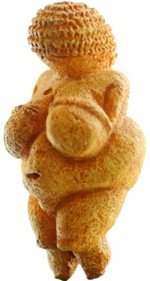
History of Stone Age Art (2.5 million-3,000 BCE)Prehistoric art comes from three epochs of prehistory: Paleolithic, Mesolithic and Neolithic. The earliest recorded art is the Bhimbetka petroglyphs (a set of 10 cupules and an engraving or groove) found in a quartzite rock shelter known as Auditorium cave at Bhimbetka in central India, dating from at least 290,000 BCE. However, it may turn out to be much older (c.700,000 BCE). This primitive rock art was followed, no later than 250,000 BCE, by simple figurines (eg. Venus of Berekhat Ram [Golan Heights] and Venus of Tan-Tan [Morocco]), and from 80,000 BCE by the Blombos cave stone engravings, and the cupules at the Dordogne rock shelter at La Ferrassie. Prehistoric culture and creativity is closely associated with brain-size and efficiency which impacts directly on "higher" functions such as language, creative expression and ultimately aesthetics. Thus with the advent of "modern" homo sapiens painters and sculptors (50,000 BCE onwards) such as Cro-Magnon Man and Grimaldi Man, we see a huge outburst of magnificent late Paleolthic sculpture and painting in France and the Iberian peninsular. This comprises a range of miniature obese venus figurines (eg. the Venuses of Willendorf, Kostenky, Monpazier, Dolni Vestonice, Moravany, Brassempouy, Gagarino, to name but a few), as well as mammoth ivory carvings found in the caves of Vogelherd and Hohle Fels in the Swabian Jura. However, the greatest art of prehistory is the cave painting at Chauvet, Lascaux and Altamira. |
|
RENAISSANCE POST-RENAISSANCE |
|
MODERN ART CONTEMPORARY ART |
These murals were painted in caves reserved as a sort of prehistoric art gallery, where artists began to paint animals and hunting scenes, as well as a variety of abstract or symbolic drawings. In France, they include the monochrome Chauvet Cave pictures of animals and abstract drawings, the hand stencil art at Cosquer Cave, and the polychrome charcoal and ochre images at Pech-Merle, and Lascaux. In Spain, they include polychrome images of bison and deer at Altamira Cave in Spain. Outside Europe, major examples of rock art include: Ubirr Aboriginal artworks (from 30,000 BCE), the animal figure paintings in charcoal and ochre at the Apollo 11 Cave (from 25,500 BCE) in Namibia, the Bradshaw paintings (from 17,000 BCE) in Western Australia, and the hand stencil images at the Cuevas de las Manos (Cave of the Hands) (from 9500 BCE) in Argentina, among many others. Mesolithic Art (c.10,000-4,000 BCE) Against a background of a new climate, improved living conditions and consequent behaviour patterns, Mesolithic art gives more space to human figures, shows keener observation, and greater narrative in its paintings. Also, because of the warmer weather, it moves from caves to outdoor sites in numerous locations across Europe, Asia, Africa, Australasia and the Americas. Mesolithic artworks include the bushman rock paintings in the Waterberg area of South Africa, the paintings in the Rock Shelters of Bhimbetka in India, and Australian Aboriginal art from Arnhem Land. It also features more 3-D art, including bas-reliefs and free standing sculpture. Examples of the latter include the anthropomorphic figurines uncovered in Nevali Cori and Göbekli Tepe near Urfa in eastern Asia Minor, and the statues of Lepenski Vir (eg. The Fish God) in Serbia. Other examples of Mesolithic portable art include bracelets, painted pebbles and decorative drawings on functional objects, as well as ancient pottery of the Japanese Jomon culture. One of the greatest works of Mesolithic art is the sculpture "Thinker From Cernavoda" from Romania. Neolithic Art (c.4,000-2,000 BCE) The more "settled" and populous Neolithic era saw a growth in crafts like pottery and weaving. This originated in Mesolithic times from about 9,000 BCE in the villages of southern Asia, after which it flourished along the Yellow and Yangtze river valleys in China (c.7,500 BCE) - see Neolithic Art in China - then in the fertile crescent of the Tigris and Euphrates river valleys in the Middle East (c.7,000) - the 'cradle of civilization' - before spreading to India (c.5,000), Europe (c.4,000), China (3,500) and the Americas (c.2,500). Although most art remained functional in nature, there was a greater focus on ornamentation and decoration. For example, calligraphy - one of the great examples of Chinese art - first appears during this period. See: Chinese Art Timeline for details. Neolithic art also features free standing sculpture, bronze statuettes (notably by the Indus Valley Civilization), primitive jewellery and decorative designs on a variety of artifacts. The most spectacular form of late Neolithic art was architecture: featuring large-stone structures known as megaliths, ranging from the Egyptian pyramids, to the passage tombs of Northern Europe - such as Newgrange and Knowth in Ireland - and the assemblages of large upright stones (menhirs) such as those at the Stonehenge Stone Circle and Avebury Circle in England. (For more, please see: megalithic art.) However, the major medium of Neolithic art was ceramic pottery, the finest examples of which were produced around the region of Mesopotamia (see Mesopotamian art) and the eastern Mediterranean. For more chronology, see: Pottery Timeline. Towards the close of this era, hieroglyphic writing systems appear in Sumer, heralding the end of prehistory.
|
|
|
History of Bronze Age Art (In Europe: 3000-1200 BCE)The most famous examples of Bronze Age art appeared in the 'cradle of civilization' around the Mediterranean in the Near East, during the rise of Mesopotamia (present-day Iraq), Greece, Crete (Minoan civilization) and Egypt. The emergence of cities, the use of written languages and the development of more sophisticated tools led the creation of a far wider range of monumental and portable artworks. Egypt, arguably the greatest civilization in the history of ancient art, was the first culture to adopt a recognizable style of art. Egyptian painters depicted the head, legs and feet of their human subjects in profile, while portraying the eye, shoulders, arms and torso from the front. Other artistic conventions laid down how Gods, Pharaohs and ordinary people should be depicted, regulating such elements as size, colour and figurative position. A series of wonderful Egyptian encaustic wax paintings, known as the Fayum portraits, offer a fascinating glimpse of Hellenistic culture in Ancient Egypt. In addition, the unique style of Egyptian architecture featured a range of massive stone burial chambers, called Pyramids. Egyptian expertise in stone had a huge impact on later Greek architecture. Famous Egyptian pyramids include: The Step Pyramid of Djoser (c.2630 BCE), and The Great Pyramid at Giza (c.2550 BCE), also called the Pyramid of Khufu or 'Pyramid of Cheops'. In Mesopotamia and Ancient Persia, Sumerians were developing their own unique building - an alternative form of stepped pyramid called a ziggurat. These were not burial chambers but man-made mountains designed to bring rulers and people closer to their Gods who according to legend lived high up in mountains to the east. Ziggurats were built from clay bricks, typically decorated with coloured glazes. See Sumerian Art (c.4500-2270 BCE). For most of Antiquity, the art of ancient Persia was closely intertwined with that of its neighbours, especially Mesopotamia (present-day Iraq), and influenced - and was influenced by - Greek art. Early Persian works of portable art feature the intricate ceramics from Susa and Persepolis (c.3000 BCE), but the two important periods of Persian art were the Achaemenid Era (c.550-330 BCE) - exemplified by the monumental palaces at Persepolis and Susa, decorated with sculpture, stone reliefs, and the famous "Frieze of Archers" (Louvre, Paris) created out of enameled brick - and the Sassanid Era (226-650 CE) - noted for its highly decorative stone mosaics, gold and silver dishes, frescoes and illuminated manuscripts as well as crafts like carpet-making and silk-weaving. But, the greatest relics of Sassanian art are the rock sculptures carved out of steep limestone cliffs at Taq-i-Bustan, Shahpur, Naqsh-e Rostam and Naqsh-e Rajab. The first important strand of Aegean art, created on Crete by the Minoans, was rooted in its palace architecture at Knossos, Phaestus, Akrotiri, Kato Zakros and Mallia, which were constructed using a combination of stone, mud-brick and plaster, and decorated with colourful murals and fresco pictures, portraying mythological animal symbols (eg. the bull) as well as a range of mythological narratives. Minoan art also features stone carvings (notably seal stones), and precious metalwork. The Minoan Protopalatial period (c.1700 BCE), which ended in a major earthquake, was followed by an even more ornate Neopalatial period (c.1700-1425 BCE), which witnessed the highpoint of the culture before being terminated by a second set of earthquakes in 1425. Minoan craftsmen are also noted for their ceramics and vase-painting, which featured a host of marine and maritime motifs. This focus on nature and events - instead of rulers and deities - is also evident in Minoan palace murals and sculptures. Named after the metal which made it prosperous, the Bronze Age period witnessed a host of wonderful metalwork made from many different materials. This form of metallugy is exemplified by two extraordinary masterpieces: The "Ram in the Thicket" (c.2500 BCE, British Museum, London) a small Iraqi sculpture made from gold-leaf, copper, lapis lazuli, and red limestone; and The "Maikop Gold Bull" (c.2500 BCE, Hermitage, St Petersburg) a miniature gold sculpture of the Maikop Culpture, North Caucasus, Russia. See also: Assyrian art (c.1500-612 BCE) and Hittite art (c.1600-1180 BCE). The period also saw the emergence of Chinese bronzeworks (from c.1750 BCE), in the form of bronze plaques and sculptures often decorated with Jade, from the Yellow River Basin of Henan Province, Central China. For Bronze Age civilizations in the Americas, see: Pre-Columbian art, which covers the art and crafts of Mesoamerican and South American cultures.
|
|
|
History of Iron Age Art and Classical Antiquity (c.1500-200 BCE) Art of Classical Antiquity witnessed a huge growth during this period, especially in Greece and around the eastern Mediterranean. It coincided with the rise of Hellenic (Greek-influenced) culture. Mycenean Art (c.1500-1100 BCE) Although Mycenae was an independent Greek city in the Greek Peloponnese, the term "Mycenean" culture is sometimes used to describe early Greek art as a whole during the late Bronze Age. Initially very much under the influence of Minoan culture, Mycenean art gradually achieved its own balance between the lively naturalism of Crete and the more formal artistic idiom of the mainland, as exemplified in its numerous tempera frescoes, sculpture, pottery, carved gemstones, jewellery, glass, ornaments and precious metalwork. Also, in contrast to the Minoan "maritime trading" culture, Myceneans were warriors, so their art was designed primarily to glorify their secular rulers. It included a number of tholos tombs filled with gold work, ornamental weapons and precious jewellery. Ancient Greek Art (c.1100-100 BCE) Ancient Greek art is traditionally divided into the following periods: (1) the Dark Ages (c.1100-900 BCE). (2) The Geometric Period (c.900-700 BCE). (3) The Oriental-Style Period (c.700-625 BCE). (4) The Archaic Period (c.625-500 BCE). (5) The Classical Period (c.500-323 BCE). (6) The Hellenistic Period (c.323-100 BCE). Unfortunately, nearly all Greek painting and a huge proportion of Greek sculpture has been lost, leaving us with a collection of ruins or Roman copies. Greek architecture, too, is largely known to us through its ruins. Despite this tiny legacy, Greek artists remain highly revered, which demonstrates how truly advanced they were. Like all craftsmen of the Mediterranean area, the ancient Greeks borrowed a number of important artistic techniques from their neighbours and trading partners. Even so, by the death of the Macedonian Emperor Alexander the Great in 323 BCE, Greek art was regarded in general as the finest ever made. Even the Romans - despite their awesome engineering and military skills - never quite overcame their sense of inferiority in the face of Greek craftsmanship, and (fortunately for us) copied Greek artworks assiduously. Seventeen centuries later, Greek architecture, sculptural reliefs, statues, and pottery would be rediscovered during the Italian Renaissance, and made the cornerstone of Western art for over 400 years. Dark Ages Classical Period Hellenism Greek Pottery Greek pottery developed much earlier than other art forms: by 3000 BCE the Peloponnese was already the leading pottery centre. Later, following the take-over of the Greek mainland by Indo-European tribes around 2100 BCE, a new form of pottery was introduced, known as Minyan Ware. It was the first Greek type to be made on a potter's wheel. Despite this, it was Minoan pottery on Crete - with its new dark-on-light style - that predominated during the 2nd Millennium BCE. Thereafter, however, Greek potters regained the initiative, introducing a series of dazzling innovations including: beautifully proportioned Geometric Style pottery (900-725), as well as Oriental (725-600), Black-Figure (600-480) and Red-Figure (530-480) styles. Famous Greek ceramicists include Exekias, Kleitias, Ergotimos, Nearchos, Lydos, the Amasis Painter, Andokides, Euthymides, and Sophilos (all Black-Figure), plus Douris, Brygos and Onesimos (Red-Figure). In Etruria, Italy, the older Villanovan Culture gave way to Etruscan Civilization around 700 BCE. This reached its peak during the sixth century BCE as their city-states gained control of central Italy. Like the Egyptians but unlike the Greeks, Etruscans believed in an after-life, thus tomb or funerary art was a characteristic feature of Etruscan culture. Etruscan artists were also renowned for their figurative sculpture, in stone, terracotta and bronze. Above all Etruscan art is famous for its "joi de vivre", exemplified by its lively fresco mural painting, especially in the villas of the rich. In addition, the skill of Etruscan goldsmiths was highly prized throughout Italy and beyond. Etruscan culture, itself strongly influenced by Greek styles, had a marked impact on other cultures, notably the Hallstatt and La Tene styles of Celtic art. Etruscan culture declined from 396 BCE onwards, as its city states were absorbed into the Roman Empire.
From about 600 BCE, migrating pagan tribes from the Russian Steppes, known as Celts, established themselves astride the Upper Danube in central Europe. Celtic culture, based on exceptional trading skills and an early mastery of iron, facilitated their gradual expansion throughout Europe, and led to two styles of Celtic art whose artifacts are known to us through several key archeological sites in Switzerland and Austria. The two styles are Hallstatt (600-450) and La Tene (450-100). Both were exemplified by beautiful metalwork and complex linear designwork. Although by the early 1st Millennium CE most pagan Celtic artists had been fully absorbed into the Roman Empire, their traditions of spiral, zoomorphic, knotwork and interlace designs later resurfaced and flourished (600-1100 CE) in many forms of Hiberno-Saxon art (see below) such as illuminated Gospel manuscripts, religious metalwork, and High Cross Sculpture. Famous examples of Celtic metalwork art include the Gundestrup Cauldron, the Petrie Crown and the Broighter gold torc. Architecture Unlike their intellectual Greek neighbours, the Romans were primarily practical people with a natural affinity for engineering, military matters, and Empire building. Roman architecture was designed to awe, entertain and cater for a growing population both in Italy and throughout their Empire. Thus Roman architectural achievements are exemplified by new drainage systems, aqueducts, bridges, public baths, sports facilities and amphitheatres (eg. the Colosseum 72-80 CE), characterized by major advances in materials (eg. the invention of concrete) and in the construction of arches and roof domes. The latter not only allowed the roofing of larger buildings, but also gave the exterior far greater grandeur and majesty. All this revolutionized the Greek-dominated field of architecture, at least in form and size, if not in creativity, and provided endless opportunity for embellishment in the way of scultural reliefs, statues, fresco murals, and mosaics. The most famous examples of Roman architecture include: the massive Colosseum, the Arch of Titus, and Trajan's Column. Painting, Sculpture If Roman architecture was uniquely grandiose, its paintings and sculptures continued to imitate the Greek style, except that its main purpose was the glorification of Rome's power and majesty. Early Roman art (c.200-27 BCE) was detailed, unidealized and realistic, while later Imperial styles (c.27 BCE - 200 CE) were more heroic. Mediocre painting flourished in the form of interior-design standard fresco murals, while higher quality panel painting was executed in tempera or in encaustic pigments. Roman sculpture too, varied in quality: as well as tens of thousands of average quality portrait busts of Emperors and other dignitaries, Roman sculptors also produced some marvellous historical relief sculptures, such as the spiral bas relief sculpture on Trajan's Column, celebrating the Emperor's victory in the Dacian war.
Early Art From Around the World Although the history of art is commonly seen as being mainly concerned with civilizations that derived from European and Chinese cultures, a significant amount of arts and crafts appeared from the earliest times around the periphery of the known world. For more about the history and artifacts of these cultures, see: Oceanic art (from the South Pacific and Australasia), African art (from all parts of the continent) and Tribal art (from Africa, the Pacific Islands, Indonesia, Burma, Australasia, North America, and Alaska). |
History of Medieval ArtConstantinople, Christianity and Byzantine Art With the death in 395 CE, of the Emperor Theodosius, the Roman empire was divided into two halves: a Western half based initially in Rome, until it was sacked in the 5th century CE, then Ravenna; and an eastern half located in the more secure city of Constantinople. At the same time, Christianity was made the exclusive official religion of the empire. These two political developments had a huge impact on the history of Western art. First, relocation to Constantinople helped to prolong Greco-Roman civilization and culture; second, the growth of Christianity led to an entirely new category of Christian art which provided architects, painters, sculptors and other craftsmen with what became the dominant theme in the visual arts for the next 1,200 years. As well as prototype forms of early Christian art, much of which came from the catacombs, it also led directly to the emergence of Byzantine art. See also: Christian Art, Byzantine Period. Art of Byzantium (Constantinople) (330-1450 CE) Byzantine art was almost entirely religious art, and centred around its Christian architecture. Masterpieces include the awesome Hagia Sophia (532-37) in Istanbul; the Church of St Sophia in Sofia, Bulgaria (527-65); and the Church of Hagia Sophia in Thessaloniki. Byzantine art also influenced the Ravenna mosaics in the Basilicas of Sant'Apollinare Nuovo, San Vitale, and Sant' Apollinare in Classe. Secular examples include: the Great Palace of Constantinople, and Basilica Cistern. As well as new architectural techniques such as the use of pendentives to spread the weight of the ceiling dome, thus permitting larger interiors, new decorative methods were introduced like mosaics made from glass, rather than stone. But the Eastern Orthodox brand of Christianity (unlike its counterpart in Rome), did not allow 3-D artworks like statues or high reliefs, believing they glorified the human aspect of the flesh rather than the divine nature of the spirit. Thus Byzantine art (eg. painting, mosaic works) developed a particular style of meaningful imagery (iconography) designed to present complex theology in a very simple way. For example, colours were used to express different ideas: gold represented Heaven; blue, the colour of human life, and so on. After 600 CE, Byzantine architecture progressed through several periods - such as, the Middle Period (c.600-1100) and the Comnenian and Paleologan periods (c.1100-1450) - gradually becoming more and more influenced by eastern traditions of construction and decoration. In Western Europe, Byzantine architecture was superceded by Romanesque and Gothic styles, while in the Near East it continued to have a significant influence on early Islamic architecture, as illustrated by the Umayyad Great Mosque of Damascus and the Dome of the Rock in Jerusalem. Byzantine Painting In the absence of sculpture, Byzantine artists specialized in 2-D painting, becoming masters of panel-painting, including miniatures - notably icons - and manuscript illumination. Their works had a huge influence on artists throughout western and central Europe, as well as the Islamic countries of the Middle East. Irish Christian Art (c.600-1100 CE) Located on the remote periphery of Western Europe, Ireland remained free of interference from either Rome or the barbarians that followed. As a result, Irish Celtic art was neither displaced by Greek or Roman idioms, nor buried in the pagan Dark Ages. Furthermore, the Church was able to establish a relatively secure network of Irish monasteries, which rapidly became important centres of religious learning and scholarship, and gradually spread to the islands off Britain and to parts of Northern England. This monastic network soon became a major patron of the arts, attracting numerous scribes and painters into its scriptoriums to create a series of increasingly ornate illuminated gospel manuscripts: examples include: the Cathach of Colmcille (c.560), the Book of Dimma (c.625), the Durham Gospels (c.650), the Book of Durrow (c.670), and the supreme Book of Kells (also called the Book of Columba), considered to be the apogee of Western calligraphy. These gospel illuminations employed a range of historiated letters, rhombuses, crosses, trumpet ornaments, pictures of birds and animals, occasionally taking up whole pages (carpet pages) of geometric or interlace patterns. The creative success of these decorated manuscripts was greatly enhanced by the availability of Celtic designs from jewellery and metalwork - produced for the Irish secular elite - and by increased cultural contacts with Anglo-Saxon craftsmen in England. Another early Christian art form developed in Ireland was religious metalwork, exemplified by such masterpieces as the Tara Brooch, the Ardagh Chalice, the Derrynaflan Chalice, and the Moylough Belt Shrine, as well as processional crosses like the 8th/9th century Tully Lough Cross and the great 12th century Cross of Cong, commissioned by Turlough O'Connor. Finally, from the late eighth century, the Church began commissioning a number of large religious crosses decorated both with scenes from the bible and abstract interlace, knotwork and other Celtic-style patterns. Examples include Muiredach's Cross at Monasterboice, County Louth, and the Ahenny High Cross in Tipperary. These scripture high crosses flourished between 900 and 1100, although construction continued as late as the 15th century. Unfortunately, with the advent of the Vikings (c.800-1000), the unique Irish contribution to Western Civilization in general and Christianity in particular, began to fade, despite some contribution from Viking art. Thereafter, Roman culture - driven by the Church of Rome - began to reassert itself across Europe. A Word About Asian Art In contrast to Christianity which permits figurative representation of Prophets, Saints and the Holy family, Islam forbids all forms of human iconography. Thus Islamic art focused instead on the development of complex geometric patterns, illuminated texts and calligraphy. In East Asia, the visual arts of India and Tibet incorporated the use of highly coloured figures (due to their wide range of pigments) and strong outlines. Painting in India was extremely diverse, as were materials (textiles being more durable often replaced paper) and size (Indian miniatures were a specialty). Chinese art specialized in ceremonial bronze sculpture, calligraphic and brush painting and jade carving, as well as lacquerware and Chinese pottery. In Japan, Buddhist temple art, Zen Ink-Painting, Yamato-e and Ukiyo-e woodblock prints were four of the main types of Japanese art. Romanesque Art (Carolingian, Ottonian) (c.775-1050) On the continent, the revival of medieval Christian art began with Charlemagne I, King of the Franks, who was crowned Holy Roman Emperor, by Pope Leo III in 800. Charlemagne's court scriptoriums at Aachen produced a number of magnificent illuminated Christian texts, such as: the Godscalc Evangelistary, the Lorsch Gospels and the Gospels of St Medard of Soissons. Ironically, his major architectural work - the Palatine Chapel in Aachen (c.800) - was influenced not by St Peter's or other churches in Rome, but by the Byzantine-style Basilica of San Vitale in Ravenna. The Carolingian empire rapidly dissolved but Carolingian Art marked an important first step in the spread of Medieval art and the revitalization of Continental culture. Furthermore, many of the Romanesque and Gothic churches were built on the foundations of Carolingian architecture. Charlemagne's early Romanesque architectural achievements were continued by the Holy Roman Emperors Otto I-III, in a style known as Ottonian Art, which morphed into the fully fledged "Romanesque." (In England and Ireland, the Romanesque style is usually called Norman architecture.) The Church Invests in Art to Convey Its Message The spread of Romanesque art in the 11th century coincided with the reassertiveness of Roman Christianity, and the latter's influence on secular authorities led to the Christian re-conquest of Spain (c.1031) as well as the Crusade to free the Holy Land from the grip of Islam. The success of the Crusaders and their acquisition of Holy Relics triggered a wave of new cathedrals across Europe. In addition to its influence over international politics, Rome exercised growing power via its network of Bishops and its links with Monastic orders such as the Benedictines, the Cistercians, Carthusians and Augustinian Canons. From these monasteries, its officials exercised growing administrative power over the local population, notably the power to collect tax revenues which it devoted to religious works, particularly the building of cathedrals (encompassing sculpture and metalwork, as well as architecture), illuminated gospel manuscripts, and cultural scholarship - a process exemplified by the powerful Benedictine monastery at Cluny in Burgundy. Romanesque Architecture (c.1000-1200) Although based on Greek and Roman Antiquity, Romanesque architecture displayed neither the creativity of the Greeks, nor the engineering skill of the Romans. They employed thick walls, round arches, piers, columns, groin vaults, narrow slit-windows, large towers and decorative arcading. The basic load of the building was carried not its arches or columns but by its massive walls. And its roofs, vaults and buttresses were relatively primitive in comparison with later styles. Above all, interiors were dim and comparatively hemmed in with heavy stone walls. Even so, Romanesque architecture did reintroduce two important forms of fine art: sculpture (which had been in abeyance since the fall of Rome), and stained glass, albeit on a minor scale. Largely financed by monastic orders and local bishops, Gothic architecture exploited a number of technical advances in pointed arches and other design factors, in order to awe, inspire and educate the masses. Thus, out went the massively thick walls, small windows and dim interiors, in came soaring ceilings ("reaching to heaven"), thin walls and stained glass windows. This transformed the interior of many cathedrals into inspirational sanctuaries, where illiterate congregations could see the story of the bible illustrated in the beautiful stained glass art of its huge windows. Indeed, the Gothic cathedral was seen by architects as representing the universe in miniature. Almost every feature was designed to convey a theological message: namely, the awesome glory of God, and the ordered nature of his universe. Religious Gothic art - that is, architecture, relief sculpture and statuary - is best exemplified by the cathedrals of Northern France, notably Notre Dame de Paris; Reims and Chartres, as well as Cologne Cathedral, St Stephen's Cathedral Vienna and, in England, Westminster Abbey and York Minster. |
History of Renaissance Art (c.1300-1620)Strongly influenced by International Gothic, the European revival of fine art between roughly 1300 and 1600, popularly known as "the Renaissance", was a unique and (in many respects) inexplicable phenomenon, not least because of (1) the Black Death plague (1346), which wiped out one third of the European population; (2) the 100 Years War between England and France (1339-1439) and (3) the Reformation (c.1520) - none of which was conducive to the development of the visual arts. Fortunately, certain factors in the Renaissance heartland of Florence and Rome - notably the energy and huge wealth of the Florentine Medici family, and the Papal ambitions of Pope Sixtus IV (1471-84), Pope Julius II (1503-13), Pope Leo X (1513-21) and Pope Paul III (1534-45) - succeeded in overcoming all natural obstacles, even if the Church was almost bankrupted in the process. Renaissance art was founded on classicism - an appreciation of the arts of Classical Antiquity, a belief in the nobility of Man, as well as artistic advances in both linear perspective and realism. It evolved in three main Italian cities: first Florence, then Rome, and lastly Venice. Renaissance chronology is usually listed as follows: • Proto-Renaissance
(c.1300-1400) • Early
Renaissance (c.1400-1490) • High
Renaissance (c.1490-1530) Renaissance architecture employed precepts derived from ancient Greece and Rome, but kept many modern features of Byzantine and Gothic invention, such as domes and towers. Important architects included: Donato Bramante (1444-1514) the greatest exponent of High Renaisance architecture; Baldassare Peruzzi (1481-1536), an important architect and interior designer; Michele Sanmicheli (1484-1559), the leading pupil of Bramante; Jacopo Sansovino (1486-1570), the most celebrated Venetian architect; Giulio Romano (1499-1546), the chief practitioner of Italian Late Renaissance-style building design; Andrea Palladio (1508-1580), an influential theorist; and of course Michelangelo himself, who helped to design the dome for St Peter's Basilica in Rome. • Northern
Renaissance (c.1400-1530) Among the greatest sculptors of the Northern Renaissance were: the German limewood sculptor Tilman Riemenschneider (1460-1531), noted for his reliefs and freestanding wood sculpture; and the wood-carver Veit Stoss (1450-1533) noted for his delicate altarpieces.
• Mannerism
(1530-1600) |
History of Post-Renaissance ArtIt was during this period that the Catholic Counter-Reformation got going in an attempt to attract the masses away from Protestantism. Renewed patronage of the visual arts and architecture was a key feature of this propaganda campaign, and led to a grander, more theatrical style in both areas. This new style, known as Baroque art was effectively the highpoint of dramatic Mannerism. Baroque architecture took full advantage of the theatrical potential of the urban landscape, exemplified by Saint Peter's Square (1656-67) in Rome, in front of the domed St Peter's Basilica. Its architect, Gianlorenzo Bernini (1598-1680) employed a widening series of colonnades in the approach to the cathedral, conveying the impression to visitors that they are being embraced by the arms of the Catholic Church. The entire approach is constructed on a gigantic scale, to induce feelings of awe. In painting, the greatest exponent of Catholic Counter-Reformation art was Peter Paul Rubens (1577-1640) - "the Prince of painters and the painter of Princes". Other leading Catholic artists included Diego Velazquez (1599-1660), Francisco Zurbaran (1598-1664) and Nicolas Poussin (1594-1665). In Protestant Northern Europe, the Baroque era was marked by the flowering of Dutch Realist genre painting, a style uniquely suited to the new bourgeois patrons of small-scale interiors, genre-paintings, portraits, landscapes and still lifes. Several schools of 17th century Dutch painting sprang up including those of Haarlem, Delft, Utrecht, and Leiden. Leading members included the two immortals Rembrandt (1606-1669) and Jan Vermeer (1632-1675), as well as Frans Snyders (1579-1657), Frans Hals (1581-1666), Adriaen Brouwer (1605-38), Jan Davidsz de Heem (1606-84), Adriaen van Ostade (1610-85), David Teniers the Younger (1610-90), Gerard Terborch (1617-81), Jan Steen (1626-79), Pieter de Hooch (1629-83), and the landscape painters Aelbert Cuyp (1620-91), Jacob van Ruisdael (1628-82) and Meyndert Hobbema (1638-1709), among others. This new style of decorative art, known as Rococo, impacted most on interior-design, although architecture, painting and sculpture were also affected. Essentially a reaction against the seriousness of the Baroque, Rococo was a light-hearted, almost whimsical style which grew up in the French court at the Palace of Versailles before spreading across Europe. Rococo designers employed the full gamut of plasterwork, murals, tapestries, furniture, mirrors, porcelain, silks and other embellishments to give the householder a complete aesthetic experience. In painting, the Rococo style was championed by the French artists Watteau (1684-1721), Fragonard (1732-1806), and Boucher (1703-70). But the greatest works were produced by the Venetian Giambattista Tiepolo (1696-1770) whose fantastic wall and ceiling fresco paintings took Rococo to new heights. See in particular the renaissance of French Decorative Art (1640-1792), created by French Designers especially in the form of French Furniture, at Versailles and other Royal Chateaux, in the style of Louis Quatorze (XIV), Louis Quinze (XV) and Louis Seize (XVI). As it was, Rococo symbolized the decadent indolence and degeneracy of the French aristocracy. Because of this, it was swept away by the French Revolution which ushered in the new sterner Neoclassicism, more in keeping with the Age of Enlightenment and Reason. Neoclassical Art (Flourished c.1790-1830) In architecture, Neoclassicism derived from the more restrained "classical" forms of Baroque practised in England by Sir Christopher Wren (1632-1723), who designed St Paul's Cathedral. Yet another return to the Classical Orders of Greco-Roman Antiquity, the style was characterized by monumental structures, supported by columns of pillars, and topped with classical Renaissance domes. Employing innovations like layered cupolas, it lent added grandeur to palaces, churches, and other public structures. Famous Neoclassical buildings include: the Pantheon (Paris) designed by Jacques Germain Soufflot (1756-97), the Arc de Triomphe (Paris) designed by Jean Chalgrin, the Brandenburg Gate (Berlin) designed by Carl Gotthard Langhans (1732-1808), and the United States Capitol Building, designed by English-born Benjamin Henry Latrobe (1764-1820), and later by Stephen Hallet and Charles Bulfinch. See also the era of American Colonial Art (c.1670-1800). Neoclassicist painters also looked to Classical
Antiquity for inspiration, and emphasized the virtues of heroicism, duty
and gravitas. Leading exponents included the French political artist Jacques-Louis
David (1748-1825), the German portrait and history painter Anton Raphael
Mengs (1728-79), and the French master of the Academic
art style, Jean Auguste Dominique Ingres (1780-1867). Neoclassical
sculptors included: Antonio Canova (1757-1822),
Romanticism Movement (Flourished c.1790-1830) In contrast to the universal values espoused by Neo-Classicism, Romantic artists expressed a more personal response to life, relying more on their senses and emotions rather than reason and intellect. This idealism, like Neoclassism, was encouraged by the French Revolution, thus some artists were affected by both styles. Nature was an important subject for Romantics, and the style is exemplified, by the English School of Landscape Painting, the plein air painting of John Constable (1776-1837), Corot (1796-1875) along with members of the French Barbizon School and the American Hudson River School of landscape painting, as well as the more expressionistic JMW Turner (1775-1851). Arguably, however, the greatest Romantic landscape painter is arguably Caspar David Friedrich (1774-1840). Narrative or history painting was another important genre in Romanticism: leading exponents include: Francisco Goya (1746-1828) Henry Fuseli (1741-1825), James Barry (1741-1806), Theodore Gericault (1791-1824) and Eugene Delacroix (1798-63), as well as later exponents of Orientalist painting, and moody Pre-Raphaelites and Symbolists.
As the 19th century progessed, growing awareness of the rights of man plus the social impact of the Industrial Revolution caused some artists to move away from idealistic or romantic subjects in favour of more mundane subjects, depicted in a more true-life, style of naturalism. This new focus (to some extent anticipated by William Hogarth in the 18th century, see English Figurative Painting) was exemplified by the Realism style which emerged in France during the 1840s, before spreading across Europe. This new style attracted painters from all the genres - notably Gustave Courbet (1819-77) (genre-painting), Jean Francois Millet (1814-75) (landscape, rural life), Honore Daumier (1808-79) (urban life) and Ilya Repin (1844-1930) (landscape and portraits). |
History of Modern ArtFrench Impressionism, championed above all by Claude Monet (1840-1926), was a spontaneous colour-sensitive style of pleinairism whose origins derived from Jean-Baptiste Camille Corot and the techniques of the Barbizon school - whose quest was to depict the momentary effects of natural light. It encompassed rural landscapes [Alfred Sisley (1839-1899)], cityscapes [Camille Pissarro (1830-1903)], genre scenes [Pierre-Auguste Renoir (1841-1919), Edgar Degas (1834-1917), Paul Cezanne (1839-1906), and Berthe Morisot (1841-95)] and both figurative paintings and portraits [Edouard Manet (1832-83), John Singer Sargent (1856-1925)]. Other artists associated with Impressionism include, James McNeil Whistler (1834-1903) and Walter Sickert (1860-1942). Impressionists sought to faithfully reproduce fleeting moments outdoors. Thus if an object appeared dark purple - due perhaps to failing or reflected light - then the artist painted it purple. Naturalist "Academic-Style" colour schemes, being devised in theory or at least in the studio, did not allow for this. As a result Impressionism offered a whole new pictorial language - one that paved the way for more revolutionary art movements like Cubism - and is often regarded by historians and critics as the first modern school of painting. In any event, the style had a massive impact on Parisian and world art, and was the gateway to a series of colour-related movements, including Post-Impressionism, Neo-Impressionism, Pointillism, Divisionism, Fauvism, Intimism, the American Luminism or Tonalism, as well as American Impressionism, the Newlyn School and Camden Town Group, the French Les Nabis and the general Expressionist movement. Post Impressionism (c.1885 onwards) Essentially an umbrella term encompassing a number of developments and reactions to Impressionism, Post-Impressionism involved artists who employed Impressionist-type colour schemes, but were dissatisfied with the limitations imposed by merely reproducing nature. Neo-Impressionism with its technique of Pointillism was pioneered by Georges Seurat and Paul Signac (1863-1935), while major Post-Impressionists include Paul Gauguin, Vincent Van Gogh and Paul Cezanne. Inspired by Gauguin's synthetism and Bernard's cloisonnism, the Post-Impressionist group Les Nabis promoted a wider form of decorative art; another style, known as Intimisme, concerned itself with genre scenes of domestic, intimate interiors. Exemplified by the work of Pierre Bonnard (1867-1947) and Edouard Vuillard (1868-1940), it parallels other tranquil interiors such as those by James McNeil Whistler, and the Dutch Realist-influenced Peter Vilhelm Ilsted (1861-1933). Another very important movement - anti-impressionist rather than post-impressionist - was Symbolism (flourished 1885-1900), which went on to influence Fauvism, Expressionism and Surrealism. Note also that many post-Impressionist artists adopted the forms and aesthetics of classicism, as a response to the passive naturalism of Impressionist art. This led to a widespread Classical Revival in modern art, known as the 'return to order', between 1900 and 1930. For more about art politics in France, see: the Paris Salon. Colourism: Fauvism (1900 onwards) The term "Fauves" (wild beasts) was first used by the art critic Louis Vauxcelles at the 1905 Salon d'Automne exhibition in Paris when describing the vividly coloured paintings of Henri Matisse (1869-1954), Andre Derain (1880-1954), and Maurice de Vlaminck (1876-1958). Other Fauvists included the later Cubist Georges Braque (1882-1963), Raoul Dufy (1877-1953), Albert Marquet (1875-1947) and Georges Rouault (1871-1958). Most followers of Fauvism moved on to Expressionism or other movements associated with the Ecole de Paris. 19th Century/Early 20th Century Sculpture Sculptural traditions, although never independent from those of painting, are concerned primarily with space and volume, while issues of scale and function also act as distinguishing factors. Thus on the whole, sculpture was slower to reflect the new trends of modern art during the 19th century, leaving sculptors like Auguste Rodin (1840-1917) free to pursue a monumentalism derived essentially from Neoclassicism if not Renaissance ideology. The public dimension of sculpture also lent itself to the celebration of Victorian values and historical figures, which were likewise executed in the grand manner of earlier times. Thus it wasn't until the emergence of artists like Constantin Brancusi (1876-1957) and Umberto Boccioni (1882-1916) that sculpture really began to change, at the turn of the century. Expressionist Art (c.1900 onwards) Expressionism is a general style of painting that aims to express a personal interpretation of a scene or object, rather than depict its true-life features, it is often characterized by energetic brushwork, impastoed paint, intense colours and bold lines. Early Expressionists included, Vincent Van Gogh (1853-90), Edvard Munch (1863-1944) and Wassily Kandinsky (1866-1944). A number of German Expressionist schools sprang up during the first three decades of the 20th century. These included: Die Brucke (1905-11), a group based in Dresden in 1905, which mixed elements of traditional German art with Post-Impressionist and Fauvist styles, exemplified in works by Ernst Ludwig Kirchner, Karl Schmidt-Rottluff, Erik Heckel, and Emil Nolde; Der Blaue Reiter (1911-14), a loose association of artists based in Munich, including Wassily Kandinsky, Franz Marc, August Macke, and Paul Klee; Die Neue Sachlichkeit (1920s) a post-war satirical-realist group whose members included Otto Dix, George Grosz, Christian Schad and to a lesser extent Max Beckmann. Expressionism duly spread worldwide, spawning numerous derivations in both figurative painting (eg. Francis Bacon) and abstract art (eg. Mark Rothko). See also: History of Expressionist Painting (c.1880-1930). |
|
Decorative Arts: Art Nouveau (1890-1910) and Art Deco (1920s-30s) Art Nouveau (Late 19th Century - Early 20th Century) Art Nouveau (promoted as Jugendstil by the Munich Secession (1892) and Berlin Secession (1898), as Sezessionstil in the Vienna Secession (1897), and as Stile Liberty in Italy, and Modernista in Spain) derived from William Morris and the Arts and Crafts Movement in Britain, and was also influenced by both the Celtic Revival arts movement and Japanonisme. It's popularity stemmed from the 1900 Exposition Universelle in Paris, from where it spread across Europe and the United States. It was noted for its intricate flowing patterns of sinuous asymetrical lines, based on plant-forms (dating back to the Celtic Hallstatt and La Tene cultures), as well as female silhouettes and forms. Art Nouveau had a major influence on poster art, design and illustration, interior design, metalwork, glassware, jewellery, as well as painting and sculpture. Leading exponents included: Alphonse Mucha (1860-1939), Aubrey Beardsley (1872-98), Eugene Grasset (1845-1917) and Albert Guillaume (1873-1942). See also: History of Poster Art.
The Bauhaus School (Germany, 1919-1933) Derived from the two German words "bau" for building and "haus" for house, the Bauhaus school of art and design was founded in 1919 by the architect Walter Gropius. Enormously influential in both architecture and design - and their teaching methods - its instructors included such artists as Josef Albers, Lyonel Feininger, Paul Klee, Wassily Kandinsky, Oskar Schlemmer, Laszlo Moholy-Nagy, Anni Albers and Johannes Itten. Its mission was to bring art into contact with everyday life, thus the design of everyday objects was given the same importance as fine art. Important Bauhaus precepts included the virtue of simple, clean design, massproduction and the practical advantages of a well-designed home and workplace. The Bauhaus was eventually closed by the Nazis in 1933, whereupon several of its teachers emigrated to America: Laszlo Moholy-Nagy settled in Chicago where he founded the New Bauhaus in 1937, while Albers went to Black Mountain College in North Carolina. Art Deco (1920s, 1930s) The design style known as Art Deco was showcased in 1925 at the International Exhibition of Modern Decorative and Industrial Arts in Paris and became a highly popular style of decorative art, design and architecture during the inter-war years (much employed by cinema and hotel architects). Its influence was also seen in the design of furniture, textile fabrics, pottery, jewellery, and glass. A reaction against Art Nouveau, the new idiom of Art Deco eliminated the latter's flowing curvilinear forms and replaced them with Cubist and Precisionist-inspired geometric shapes. Famous examples of Art Deco architecture include the Empire State Building and the New York Chrysler Building. Art Deco was also influenced by the simple architectural designs of The Bauhaus. Invented by Pablo Picasso (1881-1973) and Georges Braque (1882-1963) and considered to be "the" revolutionary movement of modern art, Cubism was a more intellectual style of painting that explored the full potential of the two-dimensional picture plane by offering different views of the same object, typically arranged in a series of overlapping fragments: rather like a photographer might take several photos of an object from different angles, before cutting them up with scissors and rearranging them in haphazard fashion on a flat surface. This "analytical Cubism" (which originated with Picasso's "Les Demoiselles d'Avignon") quickly gave way to "synthetic Cubism", when artists began to include "found objects" in their canvases, such as collages made from newspaper cuttings. Cubist painters included: Juan Gris (1887-1927), Fernand Leger (1881-1955), Robert Delaunay (1885-1941), Albert Gleizes (1881-1953), Roger de La Fresnaye (1885-1925), Jean Metzinger (1883-1956), and Francis Picabia (1879-1953), the avant-garde artist Marcel Duchamp (1887-1968), and the sculptors Jacques Lipchitz (1891-1973), and Alexander Archipenko (1887-1964). (See also Russian art.) Short-lived but highly influential, Cubism instigated a whole new style of abstract art and had a significant impact the development of later styles such as: Orphism (1910-13), Collage (1912 onwards), Purism (1920s), Precisionism (1920s, 1930s), Futurism (1909-1914), Rayonism (c.1912-14), Suprematism (1913-1918), Constructivism (c.1919-32), Vorticism (c.1914-15) the De Stijl (1917-31) design movement and the austere geometrical style of concrete art known as Neo-Plasticism. Largely rooted in the anti-art traditions of the Dada movement (1916-24), as well as the psychoanalytical ideas of Sigmund Freud and Carl Jung, Surrealism was the most influential art style of the inter-war years. According to its chief theorist, Andre Breton, it sought to combine the unconscious with the conscious, in order to create a new "super-reality" - a "surrealisme". The movement spanned a huge range of styles, from abstraction to true-life realism, typically punctuated with "unreal" imagery. Important Surrealists included Salvador Dali (1904-89), Max Ernst (1891-1976), Rene Magritte (1898-1967), Andre Masson (1896-1987), Yves Tanguy (1900-55), Joan Miro (1893-1983), Giorgio de Chirico (1888-1978), Jean Arp (1886-1966), and Man Ray (1890-1976). The movement had a major impact across Europe during the 1930s, was the major precursor to Conceptualism, and continues to find adherents in fine art, literature and cinematography. Early 20th Century American Art (c.1900-45) American painting during the period 1900-45 was realist in style and became increasingly focused on strictly American imagery. This was the result of the reaction against the Armory Show (1913) and European hypermodernism, as well as a response to changing social conditions across the country. Later it became a patriotic response to the Great Depression of the 1930s. See also the huge advances in Skyscraper architecture of the early 20th century. For more, see: American architecture (1600-present). Specific painting movements included the Ashcan School (c.1900-1915); Precisionism (1920s) which celebrated the new American industrial landscape; the more socially aware urban style of Social Realism (1930s); American Scene Painting (c.1925-45) which embraced the work of Edward Hopper and Charles Burchfield, as well as midwestern Regionalism (1930s) championed by Grant Wood, Thomas Hart Benton and John Steuart Curry.
Abstract Expressionism (1945-60) The first international modern art movement to come out of America (it is sometimes referred to as The New York School - see also American art), it was a predominantly abstract style of painting which followed an expressionist colour-driven direction, rather than a Cubist idiom, although it also includes a number of other styles, making it more of a general movement. Four variants stand out in Abstract Expressionism: first, the "automatic" style of "action painting" invented by Jackson Pollock (1912-56) and his wife Lee Krasner (1908–1984). Second, the monumental planes of colour created by Mark Rothko (1903-70), Barnett Newman (1905-70) and Clyfford Still (1904-80) - a style known as Colour Field Painting. Third, the gestural figurative works by Willem De Kooning (1904–1997). Four, the geometric "Homage to the Square" geometric abstracts of Josef Albers (1888-1976). Highly influential, Abstract Expressionist painting continued to influence later artists for over two decades. It was introduced to Paris during the 1950s by Jean-Paul Riopelle (1923-2002), assisted by Michel Tapie's book, Un Art Autre (1952). At the same time, a number of new sub-movements emerged in America, such as Hard-edge painting, exemplified by Frank Stella. In the late 1950s/early 1960s, a purely abstract form of Colour Field painting appeared in works by Helen Frankenthaler and others, while in 1964, the famous art critic Clement Greenberg helped to introduce a further stylistic development known as "Post-Painterly Abstraction". Abstract Expressionism went on to influence a variety of different schools, including Op Art, Fluxus, Pop Art, Minimalism, Neo-Expressionism, and others. The bridge between modern art and postmodernism, Pop art employed popular imagery and modern forms of graphic art, to create a lively, high-impact idiom, which could be understood and appreciated by Joe Public. It appeared simultaneously in America and Britain, during the late 1950s, while a European form (Nouveau Realisme) emerged in 1960. Pioneered in America by Robert Rauschenberg (1925-2008) and Jasper Johns (b.1930), Pop had close links with early 20th century movements like Surrealism. It was a clear reaction against the closed intellectualism of Abstract Expressionism, from which Pop artists sought to distance themselves by adopting simple, easily recognized imagery (from TV, cartoons, comic strips and the like), as well as modern technology like screen printing. Famous US Pop artists include: Jim Dine (b.1935), Robert Indiana (b.1928), Alex Katz (b.1927), Roy Lichtenstein (1923-97), Claes Oldenburg (b.1929), and Andy Warhol (1928-87). Important Pop artists in Britain were: Peter Blake (b.1932), Patrick Caulfield (1936-2006), Richard Hamilton (b.1922), David Hockney (b.1937), Allen Jones (b.1937), RB Kitaj (b.1932), and Eduardo Paolozzi (1924-2005). From the early works of Brancusi, 20th century sculpture broadened immeasurably to encompass new forms, styles and materials. Major innovations included the "sculptured walls" of Louise Nevelson (1899-1988), the existential forms of Giacometti (1901-66), the biomorphic abstraction of both Barbara Hepworth (1903-75) and Henry Moore (1898-1986), and the spiders of Louise Bourgeois (1911-2010). Other creative angles were pursued by Salvador Dali (1904-89) in his surrealist "Mae West Lips Sofa" and "Lobster Telephone" - by Meret Oppenheim (1913-85) in her "Furry Breakfast", by FE McWilliam (1909-1992) in his "Eyes, Nose and Cheek", by Sol LeWitt (b.1928) in his skeletal box-like constructions, and by Pop-artists like Claes Oldenburg (b.1929) and Jasper Johns (b.1930), as well as by the Italians Jonathan De Pas (1932-91), Donato D'Urbino (b.1935) and Paolo Lomazzi (b.1936) in their unique "Joe Sofa". For more about the history of painting, sculpture, architecture and crafts during this period, see: Modern Art Movements. |
History of Contemporary ArtThe word "Postmodernist" is often used to describe contemporary art since about 1970. In simple terms, postmodernist art emphasizes style over substance (eg. not 'what' but 'how'; not 'art for art's sake', but 'style for stye's sake'), and stresses the importance of how the artist comunicates with his/her audience. This is exemplified by movements such as Conceptual art, where the idea being communicated is seen as more important than the artwork itself, which merely acts as the vehicle for the message. In addition, in order to increase the "impact" of visual art on spectators, postmodernists have turned to new art forms such as Assemblage, Installation, Video, Performance, Happenings and Graffiti - all of which are associated in some way or other with Conceptualism- and this idea of impact continues to inspire. For the leading postmodernists, see: Top 200 Contemporary Artists. Painters since the 1970s have experimented with numerous styles across the spectrum from pure abstraction to figuration. These include: Minimalism, a purist form of abstraction which did little to promote painting as an attractive medium; Neo-Expressionism, which encompassed groups like the "Ugly Realists", the "Neue Wilden", "Figuration Libre", "Transavanguardia", the "New Image Painters" and the so-called "Bad Painters", signalled a return to depicting recognizable objects, like the human body (albeit often in a quasi-abstract style), using rough brushwork, vivid colours and colour harmonies; and the wholly figurative styles adopted by groups such as "New Subjectivity" and the "London School". At the other extreme from Minimalism is the ultra-representational art form of photorealism (superrealism, hyperrealism). Conspicuous among this rather bewildering range of activity are figure painters like Francis Bacon, the great Lucien Freud (b.1922), the innovative Fernando Botero (b.1932), the precise David Hockney (b.1937), the photorealists Chuck Close (b.1940) and Richard Estes (b.1936), and the contemporary Jenny Saville (b.1970). See also: Contemporary British Painting (1960-2000). Sculpture since 1970 has appeared in a variety of guises, including: the large scale metal works of Mark Di Suvero (b.1933), the minimalist sculptures of Walter de Maria (b.1935), the monumental public forms of Richard Serra (b.1939), the hyper-realist nudes of John De Andrea (b.1941), the environmental structures of Anthony Gormley (b.1950), the site-specific figures of Rowan Gillespie (b.1953), the stainless steel works of Anish Kapoor (b.1954), the high-impact Neo-Pop works of Jeff Koons (b.1955), and the extraordinary 21st century works by Sudobh Gupta (b.1964) and Damian Ortega (b.1967). In addition, arresting public sculpture includes the "Chicago Picasso" - a series of metal figures produced for the Chicago Civic Centre and the architectural "Spire of Dublin" (the 'spike'), created by Ian Ritchie (b.1947), among many others. The pluralistic "anything goes" view of contemporary art (which critics might characterize as exemplifying the fable of the "Emperor's New Clothes"), is aptly illustrated in the works of Damien Hirst, a leading member of the Young British Artists school. Renowned for "The Physical Impossibility of Death in the Mind of Someone Living", a dead Tiger shark pickled in formaldehyde, and lately for his diamond encrusted skull "For the Love of God", Hirst has managed to stimulate audiences and horrify critics around the world. And while he is unlikely ever to inherit the mantle of Michelangelo, his achievement of sales worth $100 million in a single Sotheby's auction (2008) is positively eye-popping. On a more sobering note, in March 2009 the prestigious Georges Pompidou Centre of Contemporary Art in Paris staged an exhibition entitled "The Specialisation of Sensibility in the Raw Material State into Stabilised Pictorial Sensibility". This avant-garde event consisted of 9 completely empty rooms - in effect, a reincarnation of John Cage's completely silent piece of "musical" conceptual art entitled "4.33". If one of the great contemporary art venues like the Pompidou Centre regards nine completely empty spaces as a worthy art event, we are all in deep trouble. For more about the history of postmodernist painting, sculpture, and avant-garde art forms, see: Contemporary Art Movements. One might say that 19th century architecture aimed to beautify the new wave of civic structures, like railway stations, museums, government buildings and other public utilities. It did this by taking ideas from Neo-Classicism, Neo-Gothic, French Second Empire and exoticism, as well as the new forms and materials of so-called "industrial architecture", as exemplified in factories along with occasional landmark structures like the Eiffel Tower (1887-89). In comparison, 20th century architecture has been characterized by vertical development (skyscrapers), flagship buildings, and post-war reconstruction. More than any other era, its design has been dominated by the invention of new materials and building methods. It began with the exploitation of late 19th century innovations developed by the Chicago School of architecture, such as the structural steel frame, in a style known as Early Modernism. In America, architects started incorporating Art Nouveau and Art Deco design styles into their work, while in Germany and Russia totalitarian architecture pursued a separate agenda during the 1930s. Famous architects of the first part of the century included: Louis Sullivan (1856-1924), Frank Lloyd Wright (1867-1959), Victor Horta (1861-1947), Antoni Gaudi (1852-1926), Peter Behrens (1868-1940), Walter Gropius (1883-1969) and Le Corbusier (1887-1965). After 1945, architects turned away from functionalism and began creating new forms facilitated by reinforced concrete, steel and glass. Thus Late Modernism gave way to Brutalism, Corporate Modernism and High Tech architecture, culminating in structures like the Georges Pompidou Centre in Paris, and the iconic Sydney Opera House - one of the first buildings to use industrial strength Araldite to glue together the precast structural elements. Since 1970, postmodernist architecture has taken several different approaches. Some designers have stripped buildings of all ornamentation to create a Minimalist style; others have used ideas of Deconstructivism to move away from traditional rectilinear shapes; while yet others have employed digital modeling software to create totally new organic shapes in a process called Blobitecture. Famous post-war architects include: Miers van der Rohe (1886-1969), Louis Kahn (1901-74), Jorn Utzon; Eero Saarinen (1910-61), Kenzo Tange (1913-2005), IM Pei (b.1917), Norman Foster (b.1935), Richard Rogers, James Stirling (1926-92), Aldo Rossi (1931-97), Frank O. Gehry (b.1929), Rem Koolhaas (b.1944), and Daniel Libeskind (b.1946). Famous architectural groups or firms, include: Skidmore, Owings & Merrill (est 1936); Venturi & Scott-Brown (est 1925); the New York Five - Peter Eisenman, Michael Graves, Charles Gwathmey, John Hejduk, Richard Meier; and Herzog & de Meuron (est 1950). TO SEARCH FOR A PARTICULAR MOVEMENT, |
|
• For our main index, see: Visual Arts Encyclopedia.
ENCYCLOPEDIA OF ART |