Postmodernist Art
Postmodernism in 20th/21st Century Visual
Arts.
MAIN A-Z INDEX

|
Postmodernist Art
|
|
Important Examples Dog (1994) by Jeff Koons. Dancers at the Bar (2001) |
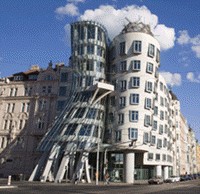
The term "postmodernist art" refers to a wide category of contemporary art created from about 1970 onwards. The hallmark of "postmodernist art" is its rejection of the aesthetics upon which its predecessor - "modern art" (1870-1970) - was based. One of these rejected values is the idea that "art" is something "special" which should be "elevated from" popular taste. Coinciding with a raft of new technological developments, postmodernism has led to almost five decades of artistic experimentation with new media and new art forms, including "Conceptual art", various types of "Performance art" and "Installation art", as well as computer-aided movements like Deconstructivism and Projection art. Using these new forms, postmodernist artists have stretched the definition of art to the point where almost "anything goes". Unfortunately, most articles on postmodernism are full of complicated words like "modernity" (not the same as modernism), and "post-modernity" (different to postmodernism), "Metamodernism" (from, but not part of, postmodernism), and "Post-postmodernism" (gimme a break). So instead of using jargon, let me give you a simple dress-code example to help you to understand "postmodernist art" and how it differs from "modern art" and its even earlier predecessor "academic art". The first major style of art after the Renaissance was academic art, the classical stuff which was taught by professors in the Academies. Academic art is the artistic equivalent of the traditional "suit and necktie". Next, about 1870, comes "modern art". This is the artistic equivalent of the "shirt and pants" or "jacket and trousers". Next, about 1970, comes "postmodern art", which is the artistic equivalent of the "jeans and T-shirt". In the same way that dress codes have become less formal and more "anything goes", so today's artists are less impressed with the old ideas of what art should be, and more focused on creating something (anything) that gets noticed. But informal dress like jeans and T-shirts have only become popular because society itself has become less formal. In the same way, as we shall see, "postmodernist art" is part of a wider current of technological, political and social change in the West, which has introduced many new attitudes and new types of behaviour. The full impact of the Internet, for instance, on the sourcing and distribution of artistic imagery, and on the creation of applied art and design, has yet to be felt. But since it has already revolutionized the music industry, its effect on the art world is not likely to be delayed for long. Definition of Postmodernist Art If you really need a one sentence definition of postmodernist art, here it is.
|
|
|
How it Differs from Contemporary Art What's the difference between postmodernist art and contemporary art? In practice, these two terms are more or less interchangeable. However, technically speaking, "postmodern art" means "after modern" and refers to a fixed period (say 50 years in length) beginning about 1970, whereas "contemporary art" refers to the moving 50-year period immediately before the present. At the moment these two periods coincide. But in 2050, for instance, "postmodern art" (1970-2020) will have been superceded by another era, while "contemporary art" will now cover the period 2000-2050. So the two will have diverged. How it Differs from Late Modernist Art In visual art, the term "late modernism" refers to movements or trends which reject some aspect of "modern art", but which otherwise remain within the modernist tradition. Styles like Abstract Expressionism (1948-65) were practised by a number of radical modern artists, including Jackson Pollock, inventor of all-over action painting - and Willem De Kooning, both of whom rejected many of the formal conventions of oil painting. And yet neither Pollock nor de Kooning would have produced something like Rauschenberg's Erased de Kooning Drawing (1953, San Francisco Museum of Modern Art), since both remained strong believers in modernist concepts of authenticity and meaning. Likewise, followers of postmodernist movements like Contemporary Realism (1970s onward) and Neo-Expressionism (1980s onward) also included numerous painters who worked in a modernist rather than a postmodernist manner. In dress code terms, late modernism is the artistic equivalent of "shirt and pants", but in a bright yellow colour. "Modern art" is usually associated with the century 1870-1970 - roughly from Impressionism to Pop-Art. Despite several global catastrophes - The Great War (1914-18), The Influenza Pandemic (1918-19), the Wall Street Crash and the Great Depression (late-1920s, 1930s) - which undermined many of the moral certainties of the era, modern artists generally retained a belief in the fundamental scientific laws of reason and rational thought. Broadly speaking, like most Westerners of the period they believed that life had meaning; that the scientific progress was automatically good; that the Christian West was superior to the rest of the world; that men were above women. Modernists also believed in the meaning, relevance and progression of art, especially fine art and architecture. Following in the footsteps of Leonardo and Michelangelo, they believed in "high art" - art which elevates and inspires the cultivated spectator - rather than "low art" which merely amuses or entertains the masses. They adopted a forward thinking approach, seeing art as something that should constantly progress, led by a leading group of avant-garde artists. World War II and the Jewish Holocaust turned everything upside down. Paris was abruptly replaced by New York as the capital of world art. In the wake of Auschwitz, all representational art - except Holocaust art - appeared suddenly irrelevant, so modern painters turned instead to abstract art (albeit packed with emotion, symbolism or animation) in order to express themselves. Amazingly, during the 1950s, the New York School - featuring Jackson Pollock's paintings as well as the calmer Colour Field painting of Mark Rothko - spearheaded a temporary recovery of art on both sides of the Atlantic. These avant-garde painters succeeded in redefining the envelope for abstract paintings, but they remained within the confines of modernism. They believed in creating authentic, finished works of art with important content. But the "modernist" era was drawing inexorably to a close. The widening revelations of the Shoah, the testing of Atomic bombs, the Cuban Missile Crisis (1962) and the Vietnam War (from 1964), caused people to become more and more disillusioned about life (and art). Already, in the mid-50s, Jasper Johns and Robert Rauschenberg had produced the first post-modern style works of Neo-Dada and Pop. Soon, mainstream Pop-art would usher in postmodernism proper, as American TV networks focused on the 1968 Tet Offensive and the chaotic Democratic Convention in Chicago.
|
|
|
Characteristics of Postmodernism "Postmodernism" is not a movement, it's a general attitude. So there is no agreed list of characteristics that define "postmodernist art". But we must start somewhere, so here are a few selected pointers. Postmodernism reflects a widespread disillusionment with life, as well as the power of existing value-systems and/or technology to effect beneficial change. As a result, authority, expertise, knowledge and eminence of achievement has become discredited. Artists are now far more wary about "big ideas" (e.g. all 'progress' is good). Most important, "Modernist art" was seen not only as elitist but also as white, male-dominated and uninterested in minorities. Which is why postmodernism champions art by Third World, Feminist and Minority artists. However, critics say that - despite its supposed "rejection" of big ideas - the postmodern movement seems to have lots of big ideas of its own. Examples include: "all types of art are equally valid"; "art can be made out of anything"; "the democratization of art is a good thing" (how about the democratization of brain surgery?). To paraphrase Andy Warhol, "anyone can be famous for 15 minutes". This idea, more than any other, sums up the postmodernist age. Faced with a new nonsensical world, the postmodernist response has been:
Postmodernism changed the educational priorities at numerous art colleges. During the 1970s, the art of painting (and to a lesser extent sculpture), was seen as worn out. Besides, the idea of working for four years to master the necessary skills of these traditional fine arts, was considered retrogressive. Art, it was believed, should be liberated from the elite and opened to the public, so art schools began to turn out a new type of graduate - someone familiar with instant postmodernist-style forms, as well as basic production techniques. In a nutshell, individual "creativity" was considered to be more important than the accumulation of craftsman-like skills. The era of "postmodernist art" has coincided with the arrival of several new image-based technologies (eg. television, video, screenprinting, computers, the Internet) and has benefited hugely from them. The new range of video and photographic imagery has reduced the importance of drawing skills, and by manipulating the new technology, artists (notably those involved in new media, like installation, video and lens-based art) have been able to short-cut the traditional processes involved in "making art," but still create something new. This is illustrated by the documentary photography of Diane Arbus, that focuses on members of minorities in New York City, and the video art of the Korean-American Nam June Paik (1932-2006). Postmodernist Focus on Popular/Low culture The term "high culture" is often used by art critics when trying to distinguish the "high culture" of painting and sculpture (and other fine arts), from the "low" popular culture of magazines, television, pulp fiction and other mass-made commodities. Modernists, along with their influential supporters like Clement Greenberg (1909-94), considered low culture to be inferior to high culture. By contrast, postmodernists - who favour a more 'democratic' idea of art - see "high culture" as more elitist. Thus Pop-art - the first postmodernist movement - made art out of ordinary consumer items (hamburgers, tins of soup, packets of soap powder, comic strips) that were instantly recognizable by Joe Public. Pop-artists and others went even further in their attempts to democratize art, by printing their "art" on mugs, paper bags, and T-shirts: a method which incidentally exemplifies the postmodernist desire to undermine the originality and authenticity of art. Ever since Neo-Dada, postmodernists have enjoyed mixing things up - or injecting novel elements into traditional forms - to create new combinations and pastiches. Fernando Botero creates primitive-style paintings of obese figures; Georg Baselitz paints upside-down figures. Gerhard Richter combined camera art and painting in his 'photo-paintings' of the 1970s, while Jeff Koons combined consumerist imagery (balloon shapes) with highly finished sculptural techniques to create his Balloon Dog pop-sculptures (1994-2000). Meanwhile Andreas Gursky combines photography with computer generated imagery to create works like Rhein II (1999, MOMA, New York), while Jeff Wall uses digitally processed photomontage in his postmodernist pictorialist creations. Postmodernist Multiple-Meanings Postmodern artists have junked the idea that a work of art has only one inherent meaning. Instead, they believe that the spectator is an equally important judge of meaning. Cindy Sherman's surrealist photography, for instance, highlights the idea that a work of art can be interpreted in a variety of ways. Indeed, some artists - such as the performance artist Marina Abramovic (b.1946) - even permit spectators to participate in their 'art works', or even require intervention by spectators in order to complete their work. The growth of consumerism and instant gratification over the last few decades of the 20th century has also had a huge impact on visual art. Consumers now want novelty. They also want entertainment and spectacle. In response, many postmodernist artists, curators and other professionals have taken the opportunity to turn art into an "entertainment product". The introduction of new types of art, for instance - such as Performance, Happenings and Installations - along with new subject-matter - including things like dead sharks, dying flies, huge ice-sculptures, crowds of nude bodies, buildings that appear to be in motion, a collection of 35,000 terracotta figures, islands wrapped in pink polypropylene fabric, painted bodies, spooky projected imagery on public buildings, and so on - have provided spectators with a range of new (sometimes shocking) experiences. Whether these new so-called art forms actually constitute "art" remains a hotly-contested issue. The postmodern conceptualists say "Yes", the traditionists say "No". In the absence of any real meaning to life - especially when we are bombarded day and night by radio and TV advertising while at the same time being forced to listen to politicians explain that two plus two equals three - postmodernists have preferred to focus on style and spectacle, often using advertising materials and techniques for maximum impact. This approach is exemplified by the commercial printing methods, billboard-style imagery and primary colours of Pop-artists like Roy Lichtenstein and James Rosenquist. This focus on surface is a reoccurring feature of postmodernist art, and sometimes goes over the top with melodramatic, dazzling, even shocking imagery. See, for instance, the fashion photography of Nick Knight and David LaChapelle. Since 1980, the use of computer and other technologies has revolutionized multimedia art (e.g. animation), and has created specific opportunities in areas like architecture and projection mapping. The importance that postmodernism places on getting the attention of the audience is perfectly illustrated by the shock-tactics of a group of Goldsmiths College students - known as the Young British Artists - in London during the late-1980s and 1990s. Made famous by three exhibitions - Freeze (1988) and Modern Medicine (1990), both curated by an unknown student called Damien Hirst (b.1965), and Sensation (1997) - the YBAs were lambasted for their shocking bad taste, and yet several (Rachel Whiteread, Damien Hirst, Douglas Gordon, Gillian Wearing, Chris Ofili, Steve McQueen, Mark Wallinger) went on to become Turner Prize-winners, while others (Jake and Dinos Chapman, Tracey Emin, Marc Quinn and Jenny Saville) also achieved considerable fame and fortune. Three Principles of "Postmodernist Art" No more faded oil paintings depicting obscure events from Greek mythology to raise a knowing smile from cultivated spectators. From its beginnings in the Pop-art movement, postmodernist painting and sculpture was bold, bright and instantly recognizable. Themes and images were borrowed mostly from high profile consumer goods, magazines, advertising graphics, TV, film, cartoons and comic books. For the first time, everyone understood the art on display. Although postmodernism has evolved since Pop-art, a key objective remains instant recognition. However, some works of "postmodernist art" are more "instantly understood" than others. Take for instance Equivalent 1 (1966, Kunstmuseum, Basel) by Carl Andre (b.1935). It is one of those works of art that need to be explained by an expert before it can be appreciated. It's a postmodernist minimalist sculpture consisting of 120 regular building bricks. The bricks are laid on top of each other on the floor in two layers of 60 bricks, set out in a precise rectangular configuration of three units by twenty units. At first glance, this masterpiece of contemporary art looks like something you might see on a super-tidy building site. Fortunately, your art gallery catalogue tells you that Andre took his radical decision to make art flat on the floor in 1965, when canoeing on a lake in New Hampshire, and that this majestic pile of bricks exemplifies his artistic creed that "form = structure = place." As it happens, the original Equivalent 1 was "destroyed" in 1966 and "remade" in 1969. (Maybe they needed the bricks for something). 2. Art Can be Made From Anything Continuing in the traditions of Marcel Duchamp - whose urinal entitled "Fountain" (1917) was the first famous example of an ordinary object being made into a work of art - postmodernists have made a point of creating art from the most unlikely materials and scraps of rubbish. See: Junk Art. Sculptors, installationists and assemblage artists have made art out of industrial scrap iron, gas-masks, felt, human skulls, human blood, dead flies, neon-lighting, foam rubber, soup cans, concrete, rubber, old clothes, elephant dung and more. The idea behind this is to democratize art and make it more accessible. 3. The Idea Matters More than the Work of Art Itself Broadly speaking, up until the 1960s, artists (including Picasso, Pollock and Lichtenstein) believed that without a finished product, there was nothing. So a huge amount of attention was lavished on the quality of the finished work of art, and the craftsmanship needed to produce it. Today, things are different. Postmodernists typically have a stronger belief in the concept behind the finished product, rather than the product itself. Which is why a lot of "postmodernist art" is known as "Conceptual Art" or "Conceptualism". This new approach is exemplified by the conceptual artwork (a list of instructions) by Martin Creed, entitled "227: The Lights Going On and Off" (2001), which won the Turner Prize in 2001. Other forms of no-product conceptualism include installations (which are purely temporary affairs, after all), performance art, happenings, projection art, and so on. Perhaps the ultimate example of conceptual art was the exhibition held in March 2009, at the French National Museum of Contemporary Art in the Pompidou Centre in Paris. Entitled "The Specialisation of Sensibility in the Raw Material State into Stabilised Pictorial Sensibility", it consisted of nine completely empty rooms, and nothing else.
|
|
|
So far, there have been no great international art movements during the postmodernist period. Instead, the era has witnessed the appearance of a number of narrow, localized movements, as well as several brand new types of art, like video and word painting. In addition, there have been dozens of artistic splinter groups, as well as one or two anti-postmodernist schools whose members have endeavoured to produce the sort of art that Michelangelo or Picasso would have been proud of. Here is a brief list of the main post-modern movements and styles, including most of the new art forms. • Pop
Art (1960s onwards) • Word
Art (Text-based Painting) (1960s onwards) • Conceptual
Art (1960s onwards) • Performance
Art and Happenings (Early-1960s onwards) • Installation
Art (1960s onwards) • Fluxus
(1960s) • Video
Art (1960s onwards). See also: Animation
art. • Minimalism
(1960s onwards) • Photorealism
(1960s, 1970s) • Land Art
(mid-1960s) • Photography
(1960s onwards) • Arte
Povera (1966-71) • Post-Minimalism (1970s) • Feminist
Art (1970s) • Graffiti
Art (1970s onwards) • Postmodernist Sculpture (1970s
onwards) • Neo-Expressionism
(1980s onwards) • Deconstructivism
(1980s-2000) • Young
British Artists (Britart) (Late 1980s/1990s) • Neo-Pop Art (late 1980s onwards) • Body
Art (1990s) • Postmodernist Painting • Cynical
Realism (1990s) • Projection Mapping (Projection
Art) (21st Century) • Computer
Art (21st Century) TO SEARCH FOR A PARTICULAR MOVEMENT, |
|
|
|
• For more about postmodernism in visual art, see: Homepage.
ENCYCLOPEDIA OF ART |