Ecole de Paris
History/Artists of the Paris School of Art
(1890-1940).
MAIN A-Z INDEX - A-Z of ART MOVEMENTS

|
Ecole de Paris
|
|
WORLD'S BEST ARTISTS WORLD'S GREATEST
ARTWORKS |
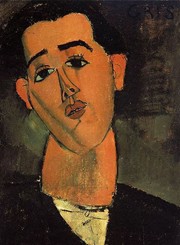
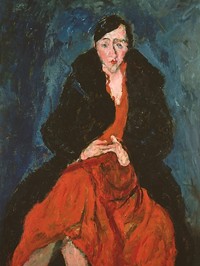
Paris School (Ecole de Paris) (c.1890-1940)In fine art, the term 'Ecole de Paris' (meaning Paris School) is a general heading for the many artistic styles, movements and tendencies in modern art that took place in Paris during the period 1890-1940. It embraces thousands of painters and sculptors who flocked to the city, many of whom came from overseas, and contributed to the climate of creative intensity. The principal modern art movements associated with the Ecole de Paris were Les Nabis (decorative arts), Fauvism (colourism), Cubism (fragmented picture plane), Orphism, Parisian Expressionism and Surrealism.
Artists of the Ecole de Paris The list of the most famous painters and sculptors associated with the Paris School includes Pierre Bonnard (1867-1947), Edouard Vuillard (1868-1940), Henri Matisse (1869-1954), Georges Rouault (1871-1958), Kees van Dongen (1877-1968), Andre Derain (1880-1954), Fernand Leger (1881-1955), Pablo Picasso (1881-1973), Georges Braque (1882-1963), Amedeo Modigliani (1884-1920), Robert Delaunay (1885-1941), Andre Lhote (1885-1962) Marc Chagall (1887-1985), Jacques Lipchitz (1891-1973), Chaim Soutine (1893-1943), Joan Miro (1893-1983) and Balthus (1908-2001). Other major painters and sculptors drawn to Paris included the Czech abstract painter Frank Kupka (1871-1957), the Cubist Juan Gris (1887-1927), the alcoholic genre-painter Maurice Utrillo (1883-1955), the Surrealist Salvador Dali (1904-89), the Romanian sculptor Constantin Brancusi (1876-1957), the Russian artists Ossip Zadkine (1890-1967), Mikhail Larionov (1881-1964), Natalia Goncharova (1881-1962) and Wassily Kandinsky (1866-1944), the Hungarian optical artist Victor Vasarely (1906-97), the leading theorist of Surrealism Andre Breton (1896-1966), the painter Jules Pascin (1885-1930), born in Bulgaria of Spanish and Italian stock, and the Russian-French colourist and lyrical abstractionist Nicolas de Stael (1914-1955). Famous art collectors of works by members of the Ecole de Paris include: Samuel Courtauld (1876-1947), and Dr Albert C Barnes (1872-1951). |
|
EVOLUTION OF VISUAL
ART |
|
|
Style of Painting Although the Ecole de Paris was a broad church, open to artists of every medium, genre and style - from Dada to Classical Realism, drawing skills and good draughtsmanship were highly prized, and its painters (except for Piet Mondrian, who lived in Paris from 1921 to 1938) typically turned to figurative rather than abstract art. Furthermore, their figuration was often romantic. The use of colour was also thoroughly explored. For an example of colour and figures being used to express how the artist feels, see Matisse's unusual work Nasturtiums and the 'Dance' (1912, Metropolitan Museum). Furthermore, although it gave birth to several styles of abstract art, this particular school of French painting was perhaps a little more representational than avant-garde art in (say) Holland (eg. De Stijl), Russia (eg. Suprematism) and Germany (eg. Bauhaus Design School). In particular, note the wide range of expressionist paintings associated with Parisian artists such as Picasso, Modigliani and Marc Chagall. For more on the links between the expressionist movement and the Paris School, see: History of Expressionist Painting (c.1880-1930). Paris - The World Centre of Art (1890-1940) The use of the term Ecole de Paris reflected the extraordinary position of the French capital as the undisputed centre of the global art world during the first four decades of the 20th century. Indeed, ever since the French Revolution, Paris had been the capital of the avant-garde in art and culture. During the 19th century, movements like Realism (c.1850 on), Impressionism (1870-80) and Post-Impressionism, as well as the prestigious reputation of the Paris Salon, the Salon d'Automne, the Salon des Independants, the Ecole des Beaux-Arts and the Academie Julian, had further enhanced the city's reputation. By 1900, few painters or sculptors could afford to ignore the importance of the city or the opportunities it offered: it also boasted numerous celebrated art dealers including Ambroise Vollard (1866-1939), Daniel-Henry Kahnweiler (1884-1979), Leonce Rosenberg (1879-1947) and his brother Paul Rosenberg (1881-1959), and Paul Guillaume (1891-1934). During the 1900s the city was the centre of Fauvism, then Cubism. By the mid-1920s it was home to an estimated 70,000 painters and sculptors, most of whom survived in poverty, first in Montmartre, later in Montparnasse. For an example of work by the ultimate Bohemian artist in Paris, who sold little and died in poverty, see Modigliani's Portrait of Jeanne Hebuterne (1918, Metropolitan). Even as late as 1950, by which time Paris had been caught up, if not eclipsed, by New York, the city could boast some 130 art galleries, showing works by roughly 60,000 artists, while every year 20 large Salons each displayed works by about 1,000 artists. For artistic reference purposes, Paris had the Louvre - the largest art museum in the world - whose extensive collection of Old Masters was copied and studied by artists from all over Europe and America.
Parisian Culture In addition, the city of Paris enjoyed an unrivalled nightlife, with a number of famous cabarets as well as a huge program of Opera and Ballet. These night-clubs and theatres were avid consumers of poster art, theatrical designs, costumes and sets, a process exemplified by The Ballets Russes, organized by Sergei Diaghilev (1872-1929). This Parisian ballet company quickly became famous for its flamboyant and colourful designs, overseen by Leon Bakst, that were an integral part of the aesthetic experience rather than mere backdrops. Master painters who worked for Diaghilev included Georges Braque, Giorgio de Chirico, Andre Derain and Henri Matisse. The wide variety of art practised in Paris is evident as late as the 1920s with Picasso entering his 'neoclassical' phase with works like Woman in White (1923, Metropolitan Museum of Art), while Dada activists competed with the emergence of Surrealism! Curiously, despite great efforts by the French authorities, including the establishment of two more of the world's best art museums - namely the Musee d'Orsay and the extraordinary Pompidou Centre, home to the massive permanent collection of the French National Museum of Modern and Contemporary Art - Paris has never regained her former position as the capital of world art. For details of European collections containing works by painters or sculptors of the Ecole de Paris, see: Art Museums in Europe. |
|
|
|
• For more about Parisian fine arts, see: Homepage.
ENCYCLOPEDIA OF ART HISTORY |