|
Greatest Expressionist
Paintings (1880-1950)
See below for a selected list of the greatest
20th century paintings in the expressionist style.
Abbreviations:
MNd'AM = Musee National d'Art Moderne, Paris.
SGiL = Stadtische Galerie im Lenbachhaus, Munich.
SGMA = State Gallery of Modern Art, Munich.
Early Expressionism
• Paul
Gauguin (1848-1903)
Brooding Woman (1891) Worcester Art Museum, MA.
Where Do We Come From? Who Are We? (1897) Boston MFA.
Girl with a Fan (1902) Folkwang Museum, Hessen.
• Vincent
van Gogh (1853-1890)
The Potato-Eaters (1885) Van Gogh Museum,
Amsterdam.
Self-Portrait with Bandaged Ear (1889) Courtauld Institute Galleries,
London.
Starry Night (1889) Museum of Modern Art, New York.
Wheat Field with Crows (1890) Van Gogh Museum, Amsterdam.
• Edvard
Munch (1863-1944)
The Sick Child (1885) National Gallery, Oslo.
Portrait of the Painter Jensen-Hjell (1885) National Gallery, Oslo.
The Scream (1893) National Gallery, Oslo.
The Madonna (1894) National Gallery, Oslo.
Girl Washing (1896) National Gallery, Oslo.
• Paula
Modersohn-Becker (1876-1907)
The Old Farmer (1903) Kunsthalle, Hamburg.
Self-Portrait with Amber Necklace (1906) PM-B Museum, Bremen.
Poorhouse Woman with Glass Bowl (1907) Ludwig Roselius Collection, Bremen.
Woman with Flowers (1907) Von der Heydt Museum, Wuppertal.
Fauvist Expressionist
Paintings
• Henri
Matisse (1869-1954)
Luxe Calme et Volupte (1904) Musee d'Orsay, Paris.
Harmony in Red (1908) Hermitage, St Petersburg.
Nude (Black and Gold) (1908) Hermitage, St. Petersburg.
La Danse (1910) Hermitage, St Petersburg.
Nasturtiums and
the 'Dance' (1912) Metropolitan Museum.
• Andre
Derain (1880-1954)
Harbour of Collioure (1905) private collection.
The Old Tree (1905) MNd'AM, Paris.
Boats at Collioure (1905) Kunstmuseum, Dusseldorf.
Self-Portrait in a Floppy Hat (1905) private collection.
Lady in a Chemise (1906) State Museum for Art, Copenhagen.
Effect of Sun on the Water (1906) Musee de l'Annonciade, Saint-Tropez.
Charing Cross Bridge (1906) National Gallery of Art, Washington DC.
The Trees (1906) Albright-Knox Art Gallery, New York.
Charing Cross Bridge I (1906) Whitney Museum, New York.
• Albert
Marquet (1875-1947)
Matisse Painting a Model in Manguin's Studio (1905) MNd'AM, Paris.
Le Pont-Neuf (1906) National Gallery of Art, Washington DC.
The Seine at Paris (1907) private collection.
• Maurice
de Vlaminck (1876-1958)
The Bar Counter (1900) Musee de Calvet, Avignon.
Man with a Pipe (1900) MNd'AM, Paris.
Bougival (1905) Emery Reves Collection.
Tugboat on the Seine (1906) National Gallery of Art, Washington DC.
The Blue House (1906) Minneapolis Institute of Arts.
The Wheat Field (Champs de Ble) (1906) Milwaukee Art Museum.
• Kees
van Dongen (1877-1968)
The Red Dancer (1907) Hermitage Museum, St Petersburg.
Woman in Black Hat (1908) Hermitage Museum, St Petersburg.
Le Coquelicot (The Corn Poppy) (1919) Toulouse-Lautrec Museum, Albi.
• Raoul
Dufy (1877-1953)
The Pantheon and St. Etienne-du-Mont (1904) Albright-Knox Art Gallery.
Posters at Trouville (1906) MNd'AM, Paris.
Boats at Martigues (1908) Courtauld Institute Galleries, London.
Casino at Nice (1927) Private Collection.
Open Window, Nice (1928) Art Institute, Nice.
• Georges
Braque (1882-1963)
Antwerp: Ships with Flags (1905) Kunstmuseum, Basel.
The Quay at Estaque (1906) MNd'AM, Paris.
• Othon
Friesz (1879-1949)
Portrait of Fernand Fleuret (1907) MNd'AM, Paris.
Sunday at Honfleur (1907) Musee Toulouse-Lautrec, Albi.
The Woman on the Green Sofa (1927) private collection.
• Marcel Gromaire (1892-1971)
The Lines of the Hand (1935) MNd'AM, Paris.
• Jean Puy (1876-1960)
Saint Alban-les-Eaux (1904) MNd'AM, Paris.
• Charles
Camoin (1879-1964)
Portrait of Albert Marquet (1904) MNd'AM, Paris.
• Henri-Charles
Manguin (1874-1949)
Still Life with Copper Pitcher (1903) Private Collection)
Landscape at St Tropez (1905) Hermitage, St Petersburg.
The Parkway (1905) Pinakothek der Moderne, Munich.
Morning at Cavaliere (1906) Hermitage, St Petersburg.
Nude Seated on an Ottoman (1908) Private Collection)
Die Brucke Expressionist
Paintings
• Ernst
Ludwig Kirchner (1880-1938)
The Street (1908) Museum of Modern Art, New York.
Marzella (1909-10) Moderna Museet, Stockholm.
Semi-Nude Woman with Hat (1911) Wallraf-Richartz Museum, Cologne.
Berlin Street Scene, (1913) Brucke Museum, Berlin.
Five Women in the Street (1913) Wallraf-Richartz Museum, Cologne.
Portrait of Gerda (1914) Van der Heydt Museum, Wuppertal.
Self-Portrait as a Soldier (1915) Allen Memorial Art Museum, Ohio.
• Karl
Schmidt-Rottluff (1884-1976)
Farmhouse in Dangast (1910) Neue Nationalgalerie, Berlin.
Mud Flat at Low Tide (1912) Private Collection.
Pharisees (1912) Museum of Modern Art, New York.
Portrait of Emy (1919) North Carolina Museum of Art.
Double Portrait of S and L (1925) Museum am Ostwall, Dortmund.
• Emil
Nolde (1867-1956)
The Prophet (1912) woodcut, various locations.
Young Men From Papua (1913-14) Staatliche Museen, Berlin.
Red Poppies (1920) watercolour on paper, Leonard Hutton Galleries, New
York.
• Erich
Heckel (1883-1970)
Reclining Woman (1909) SGMA, Munich.
Nude on a Sofa (1909) Private Collection.
Landscape Near Dresden (1910) Neue Nationalgalerie, Berlin.
Sailing Ships in the Harbour (1911) Westfalisches Landesmuseum, Munster.
• Otto
Mueller (1874-1930)
Two Women in the Reeds (1922) SGMA, Munich.
• Heinrich Nauen (1880-1940)
The Good Samaritan (1914) Wallraf-Richartz-Museum, Cologne.
• Max Pechstein
(1881-1955)
Two Nudes (1909) Wallraf-Richartz-Museum, Cologne.
Young Woman with a Red Fan (1910) Folkwang Museum, Essen.
Der Blaue Reiter
Expressionist Paintings
• Wassily
Kandinsky (1866-1944)
The Blue Rider (1903) private collection.
Autumn in Bavaria (1908) Musee National d'Art Moderne, Paris.
Winter Landscape (1909) Hermitage Museum, St Petersburg.
Interior, My Dining Room (1909) SGiL, Munich.
Bedroom in Ainmillerstrasse (1909) SGiL, Munich.
Arabs I (Cemetery) (1909) Kunsthalle, Hamburg.
Church in Murnau (1910) SGiL, Munich.
• Alexei
von Jawlensky (1864-1941)
Portrait of the Dancer Alexander Sakharov (1909) Lenbachhaus, Munich.
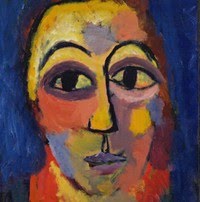
Head (1910) Museum of Modern Art, New York.
• Head of a Woman (1911) National Gallery of Modern Art, Edinburgh.
• Head of a Woman 'Medusa' (1923) Museum of Fine Arts, Lyon.
• Franz Marc
(1880-1916)
The Large Blue Horses (1911) Walker Art Centre, Minneapolis.
Tiger (1912) SGiL, Munich.
Little Blue Horse (1912) Saarland Museum.
In the Rain (1912) Stadtische Galerie im Lenbachhaus, Munich.
Deer in the Forest II (1914) Staatliche Kunsthalle, Karlsruhe.
• Paul
Klee (1879-1940)
The Fohn Wind in the Marc's Garden (1915) SGiL, Munich.
The Houses of St Germain (1916) SGiL, Munich.
The Golden Fish (1926) Kunsthalle, Hamburg.
Ad Parnassum, (1932) Kunstmuseum, Bern.
• August
Macke (1887-1914)
Portrait of Franz Marc (1910) Nationalgalerie, Berlin.
Park Restaurant (1912) Kunstmuseum, Basel.
View of Tegernsee (1913) Private Collection.
Turkish Cafe I (1914) Bonn.
• Natalia
Goncharova (1881-1962)
Moscow Street (1909) Private Collection.
Spring in the City (1911) Cudnovsky Collection, Moscow.
• Gabriele
Munter (1877-1962)
Man Seated at a Table (Portrait of Kandinsky) SGiL, Munich.
Jawlensky and Werefkin (1908-9) Lenbachhaus Gallery, Munich.
Portrait of Marianne von Werefkin (1909) SGiL, Munich.
Meditation (1917) SGiL, Munich.
• Adolf Erbsloh (1881-1947)
Nude with Garter (1919) SGMA, Munich.
• Heinrich Campendonk (1889-1957)
The Balcony (1913) Stuttgarter Kunstkabinett.
Die Neue
Sachlichkeit Expressionist Paintings
• Otto
Dix (1891-1969)
The Match Seller (1920) Staatsgalerie, Stuttgart.
Pimp with Prostitutes (1922) private collection.
Portrait of Sylvia von Harden (1926) National Museum of Modern Art, Paris.
• George
Grosz (1893-1959)
Suicide (1916) Tate Collection, London.
Pillars of Society (1926) Nationalgalerie, Berlin.
• Max
Beckmann (1884-1950)
Self-Portrait in a Tuxedo (1927) Harvard Museum.
Departure (1932-3) MOMA, New York.
Birds' Hell (1938) St Louis Art Museum.
The Beginning
(triptych) (1949) Metropolitan Museum of Art.
• Christian Schad (1894-1982)
Self-Portrait With Model (1927) Tate Gallery, London.
Operation (1929) Lenbachhaus, Munich.
• Rudolph Schlichter (1890-1955)
Dead World (1926) Staatsgalerie, Stuttgart.
Ecole de Paris Expressionist
Paintings (Paris School)
• Pierre
Bonnard (1867-1947)
The Green Blouse
(1919) Metropolitan Museum.
The Terrace at Vernon
(1939) Metropolitan Museum.
• Frank
Kupka (1871-1957)
Planes by Colours (1910-11) National Museum of Modern Art, Paris.
Madame Kupka among Vertical Lines (1910-11) MOMA, New York.
Vertical Planes (1912) MNd'AM, Paris.
• Georges
Rouault (1871-1958)
In the Mirror (1907) MNd'AM, Paris.
Self-Portrait (1911) Private Collection.
The Clown (1912) Musem of Modern Art, New York.
Christ on the Cross (1936) aquatint on paper, private collection.
The Old King (1937) private collection.
• Pablo
Picasso (1881-1973)
La Vie (1903) Cleveland
Museum of Art.
Blue Nude (c.1904) Picasso Museum, Barcelona.
Girl In a Chemise (1905) Tate Collection, London.
Les Demoiselles
d'Avignon (1907) Museum of Modern Art, New York.
Guernica (1937) Reina
Sofia, Madrid.
Weeping Woman (1937)
Tate Collection, London.
• Amedeo
Modigliani (1884-1920)
Pierrot (1915) State Art Museum, Copenhagen.
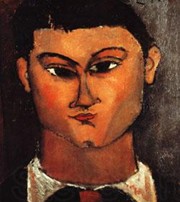
Chaim Soutine (1915) Staatsgalerie, Stuttgart.
Paul Guillaume (1916) National Museum of Modern Art, Paris.
Portrait of Juan
Gris (1915) Metropolitan Museum of Art, New York.
Max Jacob (1916) Kunstsammlung Nordrhein-Westfalen, Dusseldorf.
Seated Nude (1916) Courtauld Institute.
Bride and Groom (1916) MOMA, New York.
Portrait of Leopold Zborowski (1916) Private Collection.
Reclining Nude ("Nu Couche") (1917-18) Private Collection.
Girl with Braids (1918) Nagoya City Art Museum.
Gypsy Woman with Child (1919) National Gallery of Art, Washington DC.
Portrait of Jeanne
Hebuterne (1918) Metropolitan Museum of Art, NY.
Jeanne Hebuterne in a Yellow Sweater (1918-19) Guggenheim Museum, NY.
Note: For an interpretation of works
by artists of the Paris school, please see: Analysis
of Modern Paintings (1800-2000).
• Marc
Chagall (1887-1985)
Sabbath (1909) Wallraf-Richartz Museum, Cologne.
The Fiddler (1911) Kunstsammulung Nordrhein-West Falen.
The Village and I (1911) Museum of Modern Art, New York.
War (1964-6) Kunsthaus, Zurich.
• Chaim
Soutine (1893-1943)
Portrait of Oscar Miestschaninoff (1923) MNd'AM, Paris.
Page Boy at Maxim's (1927) Albright-Knox Art Gallery, Buffalo.
Portrait of Madeleine
Castaing (1928) Metropolitan Museum of Art.
Austrian Expressionist
Paintings
• Oskar
Kokoschka (1886-1980)
Bride of the Wind (The Tempest) (1914) Kunstmuseum, Basel.
Portrait of Herwarth Walden (1910) State Art Gallery, Stuttgart.
The Refugees (1916-17) SGMA, Munich.
Paris: the Louvre (1925) private collection.
• Egon
Schiele (1890-1918)
Self-Portrait Nude (1910) Graphische Sammlung Albertina, Vienna.
The Embrace (1917) Osterreichischegallerie, Vienna.
Belgian Expressionist
Paintings
• Leon Spilliaert (1881-1946)
Tall Trees (1921) private collection.
• Rik Wouters (1882-1916)
Portrait of Nel Wouters (1912) Musees Royaux des Beaux-Arts, Brussels.
• Constant Permeke (1886-1952)
The Fiances (1923) Museum of Modern Art, Brussels.
• Gustave de Smet (1877-1943)
The Village Fete (1930) Musee des Beaux-Arts, Ghent.
The Striped Skirt (1941) private collection.
Czech Republic Expressionist
Paintings
• Emil Filla (1882-1953)
Portrait of a Man (1907) National Gallery, Prague.
• Antonin Prochazka (1882-1945)
Portrait of a Young Man (1909) National Gallery, Prague.
• Bohumil Kubista (1884-1918)
The Players (1909) National Gallery, Prague.
Russian Expressionist
Paintings
• Mikhail
Vrubel (1856-1910)
The Seated Demon (1890) Tretyakov Gallery, Moscow.
Girl against a Persian Carpet (1886) Museum of Russian Art, Moscow.
• Nikolai Roerich (1874-1947)
The Battle of Kerzhenets (1911) Russian Museum, St Petersburg.
The Conquest of Kazan (1914) Picture Gallery of Armenia.
• Martiros Saryan (1880-1972)
Constantinople Street: Midday (1910) Tretyakov Gallery, Moscow.
Sunrise Over Ararat (1923) Lunacharskaya Collection, Moscow.
Australian
Expressionist Paintings
• Russell Drysdale (1912-81)
Man Reading a Paper (1941) University of Sydney Art Collection.
Sofala (1947) Art Gallery
of New South Wales, Sydney.
Snake Bay at Night (1959) Tasmanian Museum and Art Gallery.
• Sidney Nolan (1917-92)
Burke and Wills Expedition (1948) Sidney Nolan Trust.
Riverbend I (1964-5) Australian National University Art Collection, Canberra.
Fremantle Series (1970-9) Australian National Gallery, Canberra.
PLEASE NOTE:
For information about postwar groups of expressionists in America, see:
Abstract Expressionism. This
general movement encompasses styles and groups such as: Action
Painting (c.1950-55, Jackson Pollock, Lee Krasner); Gesturalism
(Willem de Kooning, Robert Motherwell, Franz Kline); Colour
Field Painting (c.1948-68, Mark Rothko, Barnett Newman, Clyfford
Stills, Helen Frankenthaler, Morris Louis, Kenneth Noland, Jules Olitski);
Post-Painterly Abstraction
(c.1955-65, Clement Greenberg); and Hard
Edge Painting (Late 1950s/early 60s, Al Held, Ellsworth Kelly, Frank
Stella, Brice Marden, Kenneth Noland, Ad Reinhardt). For European postwar
expressionists, see: Art Informel, as
practiced by Maria
Helena Vieira da Silva (1908-92) and others.
For styles, see: Lyrical
Abstraction (1945-60, Pierre
Soulages, Hans Hartung, Georges
Mathieu, Nicolas de Stael, Jean-Paul
Riopelle) and Tachisme (late 1940s/50s,
Jean Fautrier, Georges Mathieu, Wols, Jean Dubuffet, Sam Francis). For
figurative expressionism, see: Francis
Bacon, the leading postwar surrealist/expressionist painter.
Expressionist works can be seen in all
of the best art museums around the world.
|