Naturalism
Characteristics, History of Naturalism
in Painting.
MAIN A-Z INDEX - A-Z of ART MOVEMENTS

|
Naturalism
|
|
|
Naturalism in PaintingContents • What is Naturalism?
(Characteristics) |
|
|
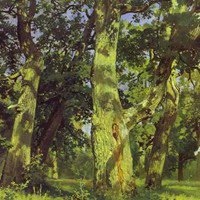
What is Naturalism? (Characteristics) In fine art panting, "naturalism" describes a true-to-life style which involves the representation or depiction of nature (including people) with the least possible distortion or interpretation. There is a quasi-photographic quality to the best naturalistic paintings: a quality which requires a minimum amount of visual detail. "Modern" naturalism dates from the affluence of the early 19th century, and was much influenced by the literary fashion for authenticity - the term was first coined by the French writer Emile Zola. It emerged first in English landscape painting, before spreading to France and then other parts of Europe. Like all comparable styles, naturalism is influenced to a degree by the aesthetics and culture, as well as the unavoidable subjectivism, of the artist. But it's a question of degree - after all, no painting can be wholly naturalist: the artist is bound to make tiny distortions to create his idea of a perfectly natural picture. Nevertheless if an artist sets out with the clear aim of replicating nature, then a naturalist painting is the most likely outcome. What is the Difference Between Naturalism and Realism? Naturalism is often confused with "realism", a true-life style of art which focuses on social realities and observable facts, rather than the ideals and aesthetics. The difference between Realism and Naturalism in (say) painting, is twofold. First, realism tends to be concerned with content rather than method. That is to say, it focuses on the issue of "who" or "what" is being painted, rather than "how" it is painted. Typically, realist artists depict common people going about their ordinary lives, rather than grand individuals performing some kind of heroic or noble act. In contrast, naturalism is all about "how" a subject is painted, rather than "who" or "what" it is. Second, Realism is typically associated with the promotion of social or political awareness. Its images frequently champion a particular set of social or political policies, as in the case of movements like American Scene Painting (c.1925-45), the Ashcan School (c.1900-1915), Precisionism (flourished 1920s), Social Realism (1930s) and Socialist Realism (1930s onwards). Of course, realist artists often paint in a naturalist way, but naturalism is not their primary concern, and is rarely the point of their works.
|
|
|
What is the Difference Between Naturalism and Atmosphere? Another important distinction is that between naturalism and atmospherics. A landscape painting can be extremely atmospheric, without being naturalist. This is usually because the artist has focused on conveying mood, rather than visual detail. Good examples include: Nocturne in Blue And Silver - Chelsea (1871, Tate Collection, London) by Whistler, and Impression, Sunrise (1873, Musee Marmottan, Paris) by Claude Monet. Neither of these pictures has sufficient detail to be naturalistic. Compare The Artist's Studio (1870, Musee d'Orsay) by Frederic Bazille; Max Schmidt in a Single Scull (1871, Metropolitan Museum of Art) by Thomas Eakins; The Music Lesson (1877, Guildhall Art Gallery, London) by Frederic Leighton; The Tepidarium (1881, Lever Art Gallery, UK) by Lawrence Alma-Tadema; Sick Girl (1881, National Gallery, Oslo) by Christian Krohg: all of which are excellent instances of naturalism, quite devoid of any atmospherics.
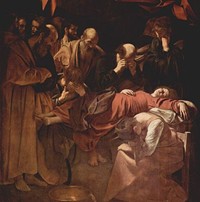
What is the Difference Between Naturalism and Idealism? In painting, idealism is a concept most applicable to figure painting, and refers to the tradition of creating a "perfect" figure - one with a goodlooking face, perfect hair, a good body shape and no outward blemishes of any kind. Rarely if ever painted or drawn from life, this type of idealized depiction was ideal for altarpieces and other forms of large scale religious art, which accounted for most of the commissions undertaken by workshops and studios in Europe. Essentially an "artificial" style of painting, it bore no resemblance to the naturalism of (say) Caravaggio, who typically used common street people as the models for his particular brand of Biblical art. Idealism remained the style preached in the main fine arts academies, at least until the 19th century, when it was finally superceded by a more naturalist style based on real-life models and plein-air painting in the outdoors. Two Types of Naturalism: Landscape and Figurative As is clear from the above examples, it is not just outdoor rural scenes that exemplify naturalism: portraits and genre-paintings of people can also make excellent examples. However, the term naturalism derives from the word "nature", and thus the most usual genre for naturalism is landscape painting - a genre exemplified by the work of John Constable, which the Anglo-Swiss painter Henry Fuseli regarded as so real, that whenever he saw it he felt like calling for his overcoat and umbrella. Even so, not all landscape pictures are naturalistic, especially where the subjectivism of the artist intrudes. Thus, for instance, the visionary religious artist John Martin created his visionary apocalyptic landscapes to illustrate the power of God. The Romantic German painter Caspar David Friedrich filled his scenic views with Symbolism and emotional Romanticism. Many of Turner's landscapes are no more than expressionist experiments in the depiction of light, while Cezanne painted dozens of views of Montagne Sainte-Victoire, sacrificing naturalist accuracy for the sake of his beloved geometrics and pictorial balance. None of these artists belong to the school of Naturalism, because they are less concerned with representing nature and more concerned with self-expression. Since classical antiquity, the history of art has seen several major advances in true-to-life drawing and oil painting. Giotto, one of the first pioneers of naturalism, produced a set of revolutionary volumized figures for the Scrovegni Chapel frescoes in Padua. See, for instance, Betrayal of Christ (Kiss of Judas) (1305) and the Lamentation of Christ (1305). Leonardo da Vinci mastered the art of sfumato to produce startlingly life-like faces in works like the Mona Lisa (1506, Louvre, Paris). Michelangelo used his unique talent as a sculptor to create a mass of sculptural figures in his Sistine Chapel frescoes (1508-12; and 1536-41). Caravaggio stunned Rome with his naturalistic figure painting, using subjects modelled on individuals recruited directly from the street. His true-to-life figures were perfect for the Catholic Counter-Reformation art of the Baroque wera. During the golden age of Dutch Realist genre painting, artists such as Jan Vermeer (domestic genre painting, interior and exterior), Pieter de Hooch (courtyards), Samuel van Hoogstraten (domestic interiors), and Emanuel de Witte (architectural church interiors), pioneered a style of precision naturalism that included figurative, domestic and social subjects. More recently, during the 19th century, Russian painters created numerous masterpieces of figurative naturalism in almost all genres. Examples of these works include: The Major's Marriage Proposal (1848, Tretyakov Gallery, Moscow) by Pavel Fedotov; Repairing the Railway (1874, Tretyakov) by Konstantin Savitsky; Portrait of Tsarevna Sophia Alexeevna in Novodevitchy Convent (1879, Tretyakov) and Reply of the Zaporozhian Cossacks to Sultan Mahmoud IV (1891, Russian Museum, St Petersburg) by Ilya Repin; Laughter ("Hail, King of the Jews!") (1882, Russian Museum) by Ivan Kramskoy; Christ and the Woman Taken in Adultery (1887, Russian Museum) by Vasily Polenov. History and Development of Naturalism (c.500 BCE - 1800) Naturalist sculpture predates naturalist painting by several centuries. Ever since the great exponents of Greek sculpture succeeded in replicating the human body, they laid a claim to achieving the first form of naturalism in art. After all, Egyptian, Etruscan and much Greek painting observed non-naturalist conventions, as did Byzantine art (murals and mosaics). Following the stagnation of the Dark Ages, the first real naturalist revival occurred during the early 14th century as a result of Giotto's break with Gothic-style figuration. Thereafter, Italian Renaissance art featured significant advances in figurative naturalism - but not in landscape as the latter was still not seen as important enough to be treated as an independent genre. The most important contributors to naturalism during the Renaissance and early Baroque eras were Leonardo, Michelangelo, Albrecht Durer and Caravaggio. See also: Classicism and Naturalism in Italian 17th Century Painting.
The Dutch Baroque era (c.1600-80) - being dominated by the more secular aesthetics of Protestant Reformation art - witnessed a surge of true-to-life works, by artists intent on replicating nature as accurately as possible - in figure drawing, landscape painting and genre works. This style of Dutch naturalism was widely appreciated by the new middle class patrons across Holland, and artists like Jan Davidsz de Heem (1606-83), Willem Kalf (1619-93), Aelbert Cuyp (1620-91), Samuel Van Hoogstraten (1627-78), Jacob Van Ruisdael (1628-82) and Jan Vermeer (1632-1675) worked hard to satisfy the demand for genre painting, interiors, still life painting and local landscapes. But the appreciation was short-lived: the Catholic Counter-Reformation led to a further century of artistic idealism (c.1680-1780), which led into Romanticism - the modern form of idealism. Naturalism in The Modern Era (from 1800) During the early 19th century, in response to Romanticism, there appeared two differing true-to-life styles: Naturalism and Realism. If Romanticism encapsulated a strong belief in the senses and emotions, and perpetuated a stylized and idealized depiction of subject matter, Realism and Naturalism appealed more to the intellect and reason, and tried to portray things as they truly were. However, as explained above, Realism and Naturalism are not the same. The modern Naturalist tradition of view painting stems from artist groups whose members sought to depict nature with the least distortion or interpretation. Such groups or colonies included the following. The Norwich
School (c.1803-33) The Hudson
River School (c.1825-75) The Barbizon
School (c.1830-1875) The Russian
Wanderers (Peredvizhniki, itinerants) (c.1863-90) The Hague School (c.1860-1900) Impressionism
(fl.1873-86) The Glasgow
School of Painting (1880-1915) The Newlyn
School (c.1884-1914) The Heidelberg
School (c.1886-1900) Irish
Landscape Artists |
|
|
|
• For information about true-to-life painting (figurative or landscape), see: Homepage.
ENCYCLOPEDIA OF ART HISTORY |