Religious Art
Christian, Hindu, Buddhist & Islamic
Arts.
MAIN A-Z INDEX

|
Religious Art
|
|
|
Religious Art (700,000 BCE - present)
|
|
|
What is Religious Art? There are many ways of defining religious art. We can say it is: (1) Any artwork that has a Christian or
Biblical theme (Christian art); or |
|
|
|
MEANING OF ART |
However, on further analysis, these definitions relate to religious "content", rather than religious "quality". For example, a painting of a crucifixion scene which drew attention to some fundamentally weird or blasphemous physical attribute of the dying Christ would hardly merit the description religious art. Furthermore, certain religions (Eastern Orthodox, Islam) have certain rules circumscribing the type of art permitted: a sculpture of Muhammad would be regarded as a blasphemy, rather than a piece of religious art. Thus, to qualify as "religious", the painting, sculpture or architecture concerned must have some recognizable moral narrative, that imbues the work with the necessary sacred "quality." As with the assessment of all art, determining whether or not this moral attribute is present, is essentially a subjective exercise, although in most cases the answer is likely to be fairly straightforward. Therefore, our suggested definition of religious art goes like this:
|
|
|
Since Antiquity, the most common type of religious art has been painting and portable sculpture. However, the form of religious art with the greatest visual impact is undoubtedly architecture. From the Egyptian Pyramids to the Stonehenge stone circle, from the Hagia Sophia in Istanbul to the Umayyad Great Mosque of Damascus, from the Dome of the Rock in Jerusalem to French Gothic Cathedrals, from St Peter's basilica in Rome to the Taj Mahal, religious authorities have consistently turned to architecture to awe and influence their congregations. Interior and exterior artistic decorations for these Christian, Islamic and Buddhist churches typically include a wide range of decorative arts, including: calligraphy, ceramics, crafts, icons, illuminated manuscripts, metalwork, mosaic, stained glass, tapestry and wood-carving.
Purpose and Cost of Religious Art The function of religious art, directly or indirectly, is to win converts. Architecture is therefore the principal form, since a cathedral can inspire, teach and house a congregation. Public statuary can also inspire, while interior mosaics and stained glass can illustrate divine stories - not unimportant in ages where illiteracy was the norm. By expounding the message of an ordered Universe under God, Christian art also contributed to the creation and preservation of social order. But it came at a price. Thus in their attempts to revive the grandeur, beauty and prestige of Rome with the finest architectural designs, sculpture and frescoes, Pope Julius II (1503-13) and Pope Leo X (1513-21) nearly bankrupted the Church. In fact, Papal overspending on art was an important cause of the Reformation, as it led to higher taxes on the common people, and greater corruption among the officers of the Church. Even so, during at least the nine centuries between 800 and 1700, the Church of Rome was by far the largest patron of the arts. History of Western Religious Art Earliest Prehistoric Religious Art Religious Art of Antiquity (c.3,500
BCE - 400 CE) Christian Art
Byzantine Religious Art (c.400-1000) Russian Religious Painting: Icons, Murals
(c.950-1700) Religious Art in Ireland (c.600-1150) Romanesque & Gothic Religious Art
(800-1400) Northern Renaissance Religious Painting
(1400-1600) Italian Renaissance Religious Art (1400-1600)
Venice
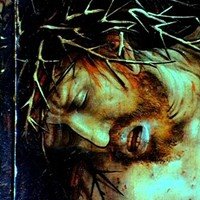
Religious Mannerist Paintings (1530-1600) One major development at this time, thanks to the likes of Antonello da Messina (1430-1479) and Caravaggio (1573-1610), among others, was the use of more realistic human forms when depicting the Holy Family and other Biblical figures. See, for instance, Christ Crowned with Thorns (Ecce Homo) (1470) by Antonello da Messina. Religious Renaissance architecture is exemplified by the Dome of Florence's Cathedral, designed by the architect and artist Filippo Brunelleschi (1377-1446), and by the rebuilding of the 1,100 year old church of St Peter's in Rome (1506-1626) by Bramante, Raphael, Sangallo, Maderno, Michelangelo and Bernini. This project extended beyond the High Renaissance into the Baroque era. Spanish Renaissance School (16th Century) |
|
|
Baroque Religious Art (1600-1700) Another type of art favoured by the Catholic Counter-Reformation was quadratura church fresco painting, designed to inspire congregations with illusionistic devices. See for example: Apotheosis of St Ignatius (1694) by Andrea Pozzo. In Spain, the devout Francisco de Zurbaran (1598-1664), strongly influenced by Spanish Quietism, produced holy paintings for numerous monasteries and Religious Orders (Carthusians, Capuchins, Dominicans, Jeronymites, among others), as well as Cathedrals and other ecclesiastical authorities. Among his noted works are Christ on the Cross (1627), Apotheosis of St. Thomas Aquinas (1631), and Adoration of the Shepherds (1638). The great Diego Velazquez (1599–1660), while famous as a virtuoso portraitist, also produced a number of holy paintings like The Immaculate Conception (1618), Joseph's Coat (1630) and Christ Crucified (1632). Spanish Baroque religious sculpture is well represented by the Seville artist Juan Martinez Montanes (1568-1649), who was dubbed the God of Wood for his carving skills, sculpted mainly wooden crucifixes and religious figures. His best known works include The Merciful Christ (1603, Seville Cathedral) and the Santiponce Altarpiece (1613); and also by the explosive Alonso Cano (1601-1667), known as the "Spanish Michelangelo", whose masterpiece is The Immaculate Conception (1655, Granada Cathedral). In Flanders, the greatest exponent of 17th century religious Flemish painting was Rubens (1577-1640), the undisputed leader of the Flemish Baroque school, following in the footsteps of earlier religious artists like Robert Campin, Hugo van der Goes and Hans Memling. In Italy, home of the Roman Catholic Church, painters like Nicolas Poussin (1594–1665), and Claude Lorrain (1600–1682) received numerous religious commissions. The greatest exponents of Italian religious sculpture were the incomparable Bernini (1598-1680) - see his Ecstasy of St.Teresa (1645–52), created for the Cornaro Chapel of the church of Santa Maria della Vittoria in Rome - and his great rival Alessandro Algardi (1598-1654), both of whom were given numerous Papal commissions. The Catholic Baroque style gave rise to an emotional style of architecture, exploiting to the full the melodramatic potential of the urban landscape. This is exemplified above all by Saint Peter's Square (1656-67) and its approaches, in front of St Peter's Basilica in Rome. Protestantism had its own religious art. 17th Century Dutch painting features some outstanding Old Testament works by Rembrandt. In addition, Dutch Realists like Harmen van Steenwyck (1612-56), Jan Davidsz de Heem (1606-83), Pieter Claesz (1597-1660), Willem Kalf (1622-93) and Willem Claesz Heda (1594-1681), introduced a genre called Vanitas painting (based on Ecclesiastes 12:8 "Vanity of vanities saith the preacher, all is vanity"), whose principal theme was the ephemeral nature of life and the absurdity of human vanities. See also the church interior paintings of Emanuel de Witte (1615-92) and Pieter Jansz Saenredam (1597-1665).
Decline of Religious Art (1700 onwards) The 19th century produced even less religious art. Although the Industrial Revolution created significant surplus wealth for both nations and individuals, it wasn't invested in Christian art. Instead it went into the development of social and public services. The only regular commissions offered by Church authorities were for free-standing sculpture to commemorate deceased Bishops and other clerics. And while a few painters continued to paint Biblical scenes, the demand for religious compositions slumped - a trend which continued into the 20th century. But see A Burial in Ornans (1850) by the realist painter Gustave Courbet, and the strange symbolist works of the Belgian painter James Ensor (1860-1949), notably Christ's Entry Into Brussels. 20th Century Religious Art Painters and sculptors have been commissioned by Popes, religious and secular authorities to illustrate a very wide range of scenes from the Bible. The choice of scenes may be determined by religious politics, as well as the type of art form and media involved. One of the most famous themes of religious sculpture, for example, is David and Goliath: witness the three Davids sculpted by Donatello (1386-1466), Andrea del Verrocchio (1435-1488), and Michelangelo (1475-1564). Leonardo handled the difficult theme of the Immaculate Conception in his beautiful Virgin of the Rocks (1484-6, Louvre, Paris). Occaisonally, artists specialized in certain biblical themes: for instance the female Baroque painter Artemisia Gentileschi (1593–1656) painted 'Judith Beheading Holofernes several times. Popular Art-Subjects From The New Testament Gospels
Popular Art-Subjects From The Old Testament Gospels
In this brief overview, phrases like Hindu art, Buddhist art and Islamic art, are no more than umbrella terms for arts and decorative crafts created within the territories occupied by the culture concerned. Architecture and sculpture (often combined) are the two most visually arresting art forms. See, for instance, the 11th century Kandariya Mahadeva Temple (1017-29) in India, the 12th century Angkor Wat Khmer Temple (1115-45) in Cambodia, and the famous 17th century Taj Mahal (1632-54) - all of which are outstanding examples of non-Christian religious architecture. Other art forms include relief sculpture, body-painting, bronze-casting, calligraphy, carpet-weaving, ceramics, costume decoration, drapery, drawing, embroidery, face-painting, friezes, furniture making, gemstone carving, goldsmithing, illumination of manuscripts, ivory carving, jewellery-making, lacquer-painted bookbinding, lustre-ware, metalworking, mosaics, painting, pottery, tapestry art, textile design, wood carving, among others. Art Involving Ancestor Worship This type of religion embaces a variety of different practices and beliefs regarding the spirits of deceased relatives. Societies whose arts and culture were closely connected with the celebration of religious ancestor worship, include several from the ancient civilization of the Mediterranean area - see, for instance, Aegean Art (2600-1100 BCE) - as well as Asian art from Japan, China, Korea, SE Asia and the Indian subcontinent. Ancestor worship was particularly widespread in ancient China. For a close look at the Chinese cultures involved, see the following resources:
Hindu Art Further Reading About Hindu Art Buddhist Art Note: Chinese Buddhist art - notably painting, sculpture, and building design - proliferated during the Eastern Jin (317-420), the Southern and Northern Dynasties (420-581), the Sui empire (589-618), most of the Tang (618-906) and the Song (906-1279) eras. For more, see the following resources:
In Korea, where Buddhism arrived from China around 370 CE, Buddhist culture remained strong for longer: for details, see Korean Art (c.3,000 BCE onwards). In India, the relationship between Buddhism, Hinduism and Islam has been extremely complex. Hindu art was influenced by the younger Buddhist art, until Buddhism faded around 950 CE century partly as a result of the growing influence of Islam (and Islamic art) in parallel with Hinduism. Because of this influence, Hindu architects adapted their designs to accomodate the traditions of the new religion, as illustrated in the design and construction of Taj Mahal, and Gol Gumbaz. But note also the recent clash of religious ideologies which occurred in Afghanistan, when Taliban muslims destroyed the monumental stone sculptures known as The Buddhas of Bamyan.
Islamic Art Other notable Islamic arts and crafts include: ceramic art notably lustre-ware, stone-carving, textile silk art, and wall painting. Book illumination was an Iranian specialty, as exemplified by the Manafi al-Hayawan (Usefulness of Animals) manuscript (1297), and the Jami al-tawarikh by Rashid al-Din. Enamelled glass and metalwork were also highly prized, take for example the exquisite metal basin of Mamluk silverwork known as the "Baptistere de Saint Louis" (Syria, 1290-1310). Islamic architecture is especially famous for religious structures such as: The Dome of the Rock (Jerusalem, built by Abd al-Malik, 691); the Great Mosque of Damascus (finished 715); the Alhambra Palace (Granada, c.1333-91); the Great Mosque of Samarkand (begun 1400); The Ottoman mosque of Sultan Ahmet I ("the Blue Mosque") (Istanbul, 1603-17); the domed mosque of Shaykh Lutfullah (1603-18), built by Safavid architects in Isfahan; Mughal architecture includes the palace complex of Fatehpur Sikri (c.1575) built during the reign of Akbar, as well as the sublime Taj Mahal (1630-53), built by Emperor Shah Jahan in memory of his favourite wife Mumtaz Mahal. Native Religious
Art |
|
• For more about Christian, Islamic, Hindu, or Buddhist arts, see: Homepage.
ENCYCLOPEDIA OF ART |