Figure Painting
Representation of Human Body in Oils, Watercolours,
Pastels.
MAIN A-Z INDEX

|
Figure Painting
|
|
|
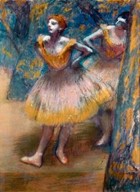
Figure PaintingThe phrase 'figure painting' is an imprecise alternative to the equally vague umbrella term 'figurative painting' which itself commonly refers to a type of representational art, based on figure drawing, in which the focus is on the realism of the human form without encroaching on the more 'artificial' genre of portraiture. Put simply, figurative paintings typically include depictions of people in informal situations, with no special emphasis on the face. Even so, figurative works encompass a wide range of different styles, including the Impressionism of Edgar Degas, the expressionism of Egon Schiele and the contemporary realism of Lucian Freud. The largest single category of figurative painting is the Nude. Contemporary expressionist figuration is sometimes called 'neo-figurative art'. Life Drawing: the Basis of Figure Painting Life drawing is the classical method of learning how to draw, which appears in the curriculum of most fine art schools. Students study and draw the body of a live model, typically nude and positioned on a raised platform. Most fine art experts consider this to be the truest and most authentic way of learning how to depict the three-dimensional shape and contours of the human body, and it is no surprise that most of the greatest figure painters were academy-trained. Students may use a variety of mediums, including pencil, charcoal, crayon, chalks, pastels, pen and ink or even paint. During the 1900s, Dublin Metropolitan School of Art ran its first life class, taught by the academic portraitist William Orpen. Human Figures in Paintings There is no independent genre of 'figure painting'. Painting genres are limited to: history paintings, landscapes, portraits, genre-scenes (ordinary daily situations), and still life. However, all these genres may include figurative elements, indeed the history of art is full of famous painters whose main focus was on painting the human form. |
|
Seated Woman (1920) by Picasso. MEANING
OF ART? |
|
Fulcrum (1997-99) by Jenny
Saville, FIGURATIVE ART WORLDS TOP ARTISTS |
Early Figurative Art Stone Age cave painters were history's first primitive figurative artists, incorporating a wealth of crude representations of human hunters. They were followed by Egyptian painters who painted innumerable figurative works, as did artists from ancient Greece, Etruria and Rome. Unfortunately, most of the frescos from Classical Antiquity have perished. Great Figure Painters of the Renaissance Most Italian Renaissance Old Masters were supremely skilled in the technique of figure painting. For example, Leonardo da Vinci's detailed knowledge of anatomy, his skill at representing human physiognomy, and how expressions and gestures reflect emotion, and his use of sfumato to create subtle shading, are all reflected in famous figure paintings such as: The Last Supper, and The Virgin of the Rocks, among others. Michelangelo was responsible for possibly the most spectacular and influential of all figure paintings in the history of art - the biblical images on the ceiling and altar wall of the Sistine Chapel in Rome. The ceiling fresco alone comprised over 300 figures. (For details, see: Sistine Chapel Frescoes.) Outside Italy, the greatest Renaissance figure painters were Roger van der Weyden (Flanders) and Matthias Grunewald (Germany) whose devotional altarpieces set new standards in the depiction of the human body. Figurative painters of the 16th century included Caravaggio - the first artist to depict major religious figures as 'ordinary people' - see, for instance works like The Death of the Virgin (1601-6) - as well as the great 'set-piece' painter Paolo Veronese, noted for Wedding Feast at Cana (1563) and Feast in the House of Levi (1573). |
|
|
Figure Painters (1600-1800) During the 17th century Baroque era, the tradition of figuration was kept up by Old Masters like Rubens, and the Spanish school led by Velazquez. In Italy, Poussin produced masterpieces like The Abduction of the Sabine Women (1634-8). The 18th century witnessed wonderful human forms created by William Hogarth, (see also English Figurative Painting) and the academic classicist J.A.D. Ingres - see his Valpincon Bather (1808). Modern Figure Painting Edouard Manet, the 19th century French Impressionist artist was one of the great modern figure painters. His subjects included: prostitutes, drinkers, beggars and singers, as well as the Parisian bourgeoisie. Among his famous figure paintings is Olympia (1863). Manet's artistic influence on his contemporaries such as Paul Gauguin, and Paul Cezanne was profound, as it was on later artists like Pablo Picasso. Ilya Repin, the prolific Russian/Ukrainian realist genre-painter and portrait artist, noted for his precisely coloured and composed canvases of peasants, revolutionaries, religious processions and celebrities. Thomas Eakins, the American figurative realist, subject-painter and academic portraitist noted for Max Schmitt in a Single Scull (1871) and The Gross Clinic (1875). Edgar Degas, the French Impressionist artist and talented draughtsman, was another master of the painted human form. Himself a student of Michelangelo's and Manet's works, and a keen photographer, his paintings include a wide array of ballet dancers, portraits of friends, ordinary Parisian women and female nudes. He became especially interested in how a person's physiognomy, posture, dress, and other attributes, reveal their social status or occupation. Among his many virtuoso figure paintings, are: Dancers at The Bar (1888), and Woman in the Bath (1886).
20th Century Figure Painting Pablo Picasso was one of the most talented figure painters of the early 20th century. See, in particular, works like: Garcon a la Pipe (1905, private collection), Girl In a Chemise (1905, Tate Collection) and Portrait of Gertrude Stein (1906, Metropolitan Museum of Art, New York). Although responsible for a good deal of abstract art, Picasso was also a key figure in the Classical Revival in modern art (1900-30): see, for example, Two Nudes (1906, MOMA, New York); Seated Woman (Picasso) (1920, Paris); Large Bather (1921, Musee de l'Orangerie, Paris); and Two Women Running on the Beach (1922, Musee Picasso, Paris). Another neoclassicist was Fernand Leger (1881-1955), whose modernist works included The Mechanic (1920, National Gallery of Canada); Three Women (Le Grand Dejeuner) (1921, Museum of Modern Art, New York); Nudes against a Red Background (1923, Kunstmuseum, Basel); and Two Sisters (1935, Gemaldegalerie SMPK, Berlin). Aside from Picasso, the young Viennese artist Egon Schiele (1890-1918) was perhaps the first truly outstanding figure-painter of the century, noted for his troubling and occasionally grotesque self portraits. Then came the equally controversial Balthus, who focused on erotic figurative depictions of young girls 1930-55. The abstract wing of the figurative tradition is exemplified by the Dutch-born American artist Willem de Kooning (1904-97), in his Woman series, an early example of which is Seated Woman (1944, Metropolitan Museum of Art). Another of the great modern figure painters is Lucian Freud, the German-born British artist and grandson of the psychoanalyst Sigmund Freud. His main subject was the human body, usually depicted nude in contrived positions. Rarely exhibited, his canvases featuring the human body include masterpieces like: Naked Man With Rat (1977); Naked Girl With Egg (1980); Bella (1982); and Painter and Model (1986). Photo-Realism The latest word on figure painting, photo-realism is a modern art movement led by American artist Richard Estes (b.1932) and Chuck Close. Photo-realist painters create paintings that resemble colour photographs but are in fact meticulously executed paintings. Their portrait art and figure paintings are amazingly life-like. |
|
• For more about sketching and drawing, see: Homepage.
Art
Questions | Art Glossary |