Top 10 Most Expensive Paintings Sold at
Auction
The World's Most Valuable Fine Art Pictures.

Top 10 Most Expensive Paintings Sold at
Auction
|
|
|
The World's 10 Most Expensive Paintings Contents • The 10 Most
Expensive Paintings Sold at AUCTION |
|
BEST PAINTINGS HOW TO READ a PAINTING |
10 Most Expensive
Paintings Sold at Auction (1) Salvator Mundi (c.1500) - Leonardo da Vinci ($450m) (2016) What Makes a Great Painting? |
|
1. Salvator Mundi (1500)
2. Les Femmes d'Alger (1955) |
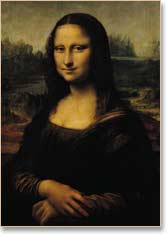
1. Salvator Mundi (c.1500) Sold at Christie’s New York, after a long 19 minute bidding war, this painting became the most expensive artwork ever sold at auction. Salvator Mundi depicts Christ signalling a sign of the cross with one hand, and holding an orb with the other. Long believed to be a painting by da Vinci, it was however only attributed to the Master in 2006 after restoration.
2. Les femmes d'Alger
(Version O) (1955) The final picture in a series of 15 paintings, all named after Delacroix's masterpiece Femmes d'Alger dans leur appartement (1834), Picasso's Les Femmes d'Alger (version O) was bought originally (along with its 14 siblings) by Victor and Sally Ganz for a total of $212,500 in June 1956. In 1997 it was sold as an individual item at Christie's for $31.9 million. An example of late Cubism, the painting was begun by Picasso in 1954, not long after the death of Henri Matisse, whom he greatly admired.
|
|
3. Reclining Nude (1917-18)
BEST CONTEMPORARY ART |
3. Reclining Nude ("Nu Couche")
(1917-18) One of Modigliani's famous female nudes, this masterpiece of expressionism shows a naked woman lying on a sumptuous red couch. Painted in Paris during the final year of World War I, it provoked a public scandal when it was first exhibited. An angry crowd gathered outside the Berthe Weill Gallery forcing the police to shut down the exhibition. A bidding contest between seven interested parties, eventually ended just below the price paid for Picasso's "Les femmes d'Alger" (1955). This work and its auction price establishes Modigliani as the most coveted and collectible artist of the expressionist movement - indeed, like Picasso, only rarity has prevented his works from establishing even higher records.
|
|
4. Three Studies of Lucian Freud (1969) |
4. Three Studies of
Lucian Freud (1969) One of the first works painted during the era of "contemporary art", this life-size triptych shows Bacon's friend - the portraitist Lucian Freud (1922-2011) - seated on a wooden chair against an orange background. The remarkable power of the three canvases comes from the juxtaposition of light, airy sunshine with the brutal physicality of both the content and the brushstrokes used to create it. The record-breaking price (under the circumstances, remarkably close to its pre-sale estimate of $135 million) was the result of a bidding contest between seven interested buyers. A combination of expressionism and surrealism, this complex work establishes Bacon as one of the greatest modern artists of the mid-20th century.
|
|
5. Twelve Landscape Screens
BEST 19th CENTURY ART |
5. Twelve Landscape Screens
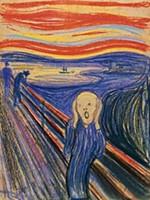
(1925) Qi Baishi was the first Chinese artist to break the $100m mark at auction. Twelve Landscape Screens are a set of ink-brush paintings. The artist is best known for his calligraphy and brush paintings, and these 1925 landscapes are considered some of his most expressive works. Each screen measures 47cm x 180cm and represents a landscape, including mountains and water scenes. Art experts believe the series of paintings were created after the artist had taken a trip around China. 6. The Scream (1895) • Painted by Edvard Munch (1863-1944). • Sold at auction in 2012, for $119.9 million. • Seller: Petter Olsen. Buyer: unknown. One of the greatest expressionist paintings ever, this Munch masterpiece holds a number of records. The most expensive painting ever sold at auction, it is also the highest priced work of modern art as well as the costliest of all pastel drawings. The work is seen as an expression of personal suffering. Munch's mother passed away when he was 5; his sister Sophie died when he was 14; his father died when Munch was 25, followed by his sister Laura who developed schizophrenia and was incarcerated in an asylum in Ekeberg. From Ekeberg Hill, the location depicted in the artwork, passers-by could hear screams from the asylum as well as the animals from a slaughterhouse nearby. It was also a scene of suicides. There are three other versions of this picture: the Munch Museum in Oslo owns two of them - a pastel as well as an oil - while the National Gallery of Norway holds the earliest version, an oil painting, dated 1893.
|
|
7 . Young Girl with a Flower Basket (1905)
8 .Untitled (1982)
9 . Nude, Green Leaves & Bust (1932) |
7. Young Girl With A Flower Basket (1905) This painting depicts a naked young girl holding a flower basket. Picasso was influenced by the French Neoclassical painter Ingres, and the influence can be seen in this painting.
8. Untitled (1982) The painting depicts a black skull with slashes of red paint and angry gnashing teeth. In the early 1980s, Basquiat sent shockwaves through downtown Manhattan with his radical paintings which marked a return to figurative painting. Unfortunately, Basquiat died of a heroin overdose at the age of 27 in 1988.
9. Nude, Green Leaves
and Bust (1932) Known as the "lost Picasso" because it had not appeared in public for almost 60 years this masterpiece - the world's most expensive work of abstract art ever sold at auction - last changed hands in 1951 for $18,000.
The sale means that Picasso - with 3 out of the top 10 - is now firmly established as the most valuable of all twentieth century painters. |
|
10. Silver Car Crash (1963) |
10. Silver Car Crash
(Double Disaster) (1963) A classic example of Andy Warhol's Pop Art, this 8-foot by 13-foot painting - the last in a series of four pictures depicting car crashes - consists of two panels: on the left, a set of fifteen images of a car accident, including the image of a body sprawled across the vehicle's mangled interior, and on the right, a large silvery rectangle. Estimated to sell for in excess of $60 million, this figure was in fact the opening bid, and after a three-way bidding contest the work smashed the previous auction record for Pop Art by Warhol - now established as the most valuable of all postmodernist artists - by more than $30 million. (Green Car Crash, 1963; sold in 2007 at Christie's New York for $71.7 million.) The painting has been seen only once in public since 1987.
|
|
TOP PAINTERS |
|
|
WORLD'S BEST PAINTING
|
Top 10 Most Expensive Paintings Sold Privately
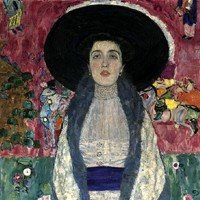
1. Interchange (1955) This was the most expensive painting ever sold privately. In a deal worth $500 million, the buyer also bought Jackson Pollock's Number 17A. He paid $300m for the de Kooning and $200m for the Pollock. 2. The Card Players (1892-93) One of several versions of the same picture - there are others in the Musee d'Orsay, Paris, and the Courtauld Institute Galleries, London - the painting is one of the most sought-after works still in private hands. 3. When will you marry? ("Nafea faa ipoipo?") (1892) This is one of Paul Gaugin's most famous paintings. It depicts a couple of Tahitian native women, sitting in a vibrant landscape of yellows, greens, blues and red. One woman is dressed Western style and she glances disapprovingly at the other woman who is displaying flesh in her native dress. The painting represents a clash of cultures, western values versus free-spirited Tahiti. The disapproving woman raises her hand, to say - when will you marry? 4. "Number 17A" (1948) Bought by Griffin along with de Kooning's "Interchange" for a total of $500 million. 5. Wasserschlangen II (Water Serpents II) (1907) This sensual oil painting by Klimt was seized from it's Jewish owner by the Nazis during World War II. It was a pricey acquisition that resulted in a lawsuit by the buyer against the dealer. Rybolovlev claimed he was tricked into paying more for the painting than it was worth. 6. "No. 6 (Violet, Green and Red)" (1951) An abstract painting by the artist Rothko. Bouvier had just bought the painting for $80m before selling it on to Rybolovlev for $186 million. Another over-inflated purchase? 7. Pendant portraits of Maerten Soolmans and Oopjen Coppit (1634) These are a pair of full-length wedding portraits by the famous Dutch artist Rembrandt. They were painted on the occasion of the marriage of Marten Soolmans and Oopjen Coppit in 1634. 8. "Masterpiece " (1962) "Masterpiece" is one of Roy Lichtenstein's most recognizable paintings, painted one year after his "Look Mickey" and one year before "Whaam!", often considered his most famous works. 9. Portrait of Adele Bloch-Bauer II (1912) In this second portrait of Adele Bloch-Bauer, which was painted five years after his first version, the earlier gold backdrop has been replaced by a quieter, more detached background. Even so, the halo-like hat and the focus on Adele's face points to Klimt's continuing regard for her. The painting also demonstrates the artist'snew attitude to colour (shorn of its use of gold), as well as his technique of combining elements of reality and unreality. Art critics typically swoon over this latter attribute. One has stated that in this composition: Klimt "demonstrated the liberation of visualization by effortlessly assimilating a whole series of influences and reworking them into a peculiarly inspired personal vision." Quite so. Personally, I think Klimt creates beautifully decorative art, with a few echoes of German Expressionism without justifying the artistic genius suggested by the record price of this canvas. However, he remains the driving force behind the historically important Vienna Secession, and can claim to be one of the best portrait artists of pre-war Europe. 10. No 5 (1948) If unconfirmed reports are correct, Mexican financier David Martinez paid $140 million for this signature work by Jackson Pollock, making it the world's most expensive painting ever. Demonstrates the growing appetite for concrete art, but other factors may be involved: notably the relative rarity of Pollock's works, his unique drip/ splash style of 'action painting', and his American nationality. The 4' x 8' composition, comprising oil, enamel and aluminum paint on fiberboard, is a nest-like tangle of browns, yellows and greys. It exemplifies Pollock's all-over approach to fine art painting, which treats all areas of the canvas equally, rejecting all conventional points of reference or focus. 11. Woman III (1953) One of the great exponents of the New York School of gestural painting, Dutch-born Willem de Kooning was noted for his biomorphic synthesis of figurative and abstract styles, often using the female form. Woman III is one of a series of six numbered 'Woman' paintings and the only one still in a private collection. The work's exploration of Freudian themes is visible in its staring eyes, huge breasts and distorted torso, as well as its aggressive brushwork and absence of 'human' colour. |
|
|
12. Portrait of Adele Bloch-Bauer I (1907) This work changed hands when a court order by the Austrian government returned it to the Artist's rightful heir after its wartime confiscation by the Nazis. Despite its inflated price-tag, it remains one of the artist's great masterpieces and exemplifies his fascination with the flat decorative features of Egyptian art, the gold and mosaic elements of Byzantine works, Freudian and other symbolism. A romantic workaholic, Klimt's contribution to the Vienna Sezession and Germanic Jugendstil art movement included numerous portraits of Vienna’s leading ladies, of which this portrait of Adele Bloch-Bauer - the wife of Jewish entrepreneur Ferdinand Bloch-Bauer - is considered a leading example. Klimt completed a second portrait of Adele Bloch-Bauer in 1912 (see No 5 in the Top 10 Auction Records, above). 13. Eight Elvises (1963) Eight Elvises by Andy Warhol was sold by private treaty in 2009 to an anonymous buyer for $100 million, according to a report in the London Economist. The 12-ft high picture has not been seen in public since it was shown in Los Angeles in 1963. 14. False Start (1959) A founding father of Pop-Art, Johns is noted for his innovative use of mixed-media such as oils, waxed-based encaustic painting, plaster and collage (including flags, maps, stenciled words, numbers, newspapers and other 'found materials' or objets trouves). In this work, the most expensive painting by a living artist, Johns uses stenciled words on a brightly colored background which provide a literal allusion to the title False Start. This is because the words - which express colours, red, white and so on - are painted in (and are positioned on) contradictory colours to those described. The use of words exemplifies Johns' utilization of everyday images to stimulate the spectator. See also: Robert Rauschenberg (1925-2008). |
|
|
15. Police Gazette (1955) Another fantastically high-priced work of non-objective art by the Dutch/ American Expressionist de Kooning. Executed in oils, enamel, and charcoal on canvas, it is considered by critics to be one of his most complex landscapes. It was purchased from the artist Sidney Janis and eventually found its way to auction in 1973 where it attracted a record bid of $180,000 from the European dealer Ernst Beyeler. Given its present reported price of $63.5 million, it has appreciated in value 352 times, over 35 years. Not bad for a painting which (I suspect) few people would claim to understand, far less appreciate. I certainly don't. 16. A Wheatfield, with Cypresses (1889) Purchased mid-recession by the philanthropist Walter Annenberg, this outstanding landscape painting now hangs in New York's Metropolitan Museum of Art. It is one of three versions of the same scene, completed by Van Gogh while resident at the Saint-Remy-de-Provence mental institution, near Arles. A slightly later version, also painted in oils, resides in the National Gallery London, and a reed-pen drawing of the same view is in the Van Gogh Museum Amsterdam. The artist himself considered A Wheatfield With Cypresses to be one of his best summer landscapes, perhaps due to his improved mood which is evident from the sunny colours, non-aggressive brushwork and overall warmth of the work. 17. Turquoise Marilyn (1964) Another huge price for a celebrity portrait by the High Priest of Pop Art, negotiated near the top of the market. 18. Portrait of Alfonso d'Avalos (1533) A figure of $70 million was allegedly paid in 2003-4 for this outstanding piece of portrait art by Titian, the greatest figure in Venetian Painting. |
|
• For more about the world's most valuable paintings, see: Encyclopedia of Visual Arts. ENCYCLOPEDIA OF ART © visual-arts-cork.com. All rights reserved. |