Spanish Baroque Artists
Painters, Sculptors, Architects, Printmakers
in 17th Century Spain.
MAIN A-Z INDEX - A-Z of ART MOVEMENTS

|
Spanish Baroque Artists
|
|
THE BAROQUE ERA PAINTING COLOURS |
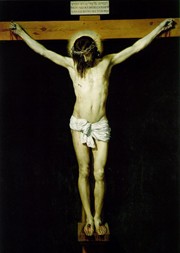
Spanish Baroque Artists (c. 1600-1700)Spanish Baroque Art Spain was ruled during most of the 16th century by two Monarchs, the Emperor Charles V (1516-1556) and then his son Philip II (1556-1598), both of whom sought to centralise their royal power and strongly identified the Crown with the Church. Although Philip II in particular was interested in and informed about the arts, and commissioned works from a wide range of artists including Titian, Hieronymus Bosch as well as El Greco, patronage in Spain came mainly from the Church. The latter was especially traditionalist, and the Counter-Reformation in Spain developed along very orthodox lines, closely adhering to the doctrines of the Council of Trent, and emphasizing in art those themes being challenged by Protestantism - the Immaculate Conception and the cult of the Virgin; the Sacraments; the intercession of the Saints. Although Protestantism never penetrated Spain, Catholic Counter-Reformation art was very popular. The Jesuit Order, a Spanish creation, was one expression of the nation's religious fervor. The characteristic Spanish style of Baroque art owes much to the national pride in the example of her visionaries and martyrs - and their sometimes hideously gory sufferings. Spanish dignity, her pride in her faith, her empire and her nobility, so evident in the portraiture of the period, could easily erupt into sometimes ferocious passion. Thus, the mystic strain in Spanish art was accompanied by a relish for physical detail, a delight in intense realism. |
|
|
|
EVOLUTION
OF VISUAL ART GREATEST
PICTURES BAROQUE
ARCHITECTURE GREAT EUROPEAN PAINTERS WORLD'S GREATEST
ARTWORKS PAINTING |
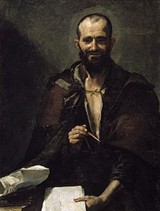
Development of Spanish Baroque Painting & Sculpture Spanish painting during the Early and High Renaissance periods (c.1400-1530) produced few Spanish Renaissance artists of any stature and little art of any enduring quality, . Even the Mannerist era in Spain (c.1530-1600) witnessed only one great painter - the Greek artist Domenikos Theotokopoulos, better known as El Greco (1541-1614). By the time El Greco died in 1614, Toledo had ceased to be the capital of Castile and Spain; the court was settled in Madrid and other cities, too, had developed and prospered. Early in the 17th century Baroque painting flourished especially in two centres, Valencia and Seville, thanks to artists like the tenebroso Francisco Ribalta (1565–1628). Then suddenly, from the later part of the 16th century, Spain is awash with great Baroque painters; the great devotional artist Francisco de Zurbaran (1598-1644); the monumental figurative painter and court portraitist to King Philip IV, Diego Velazquez (1599-1660); the leading Spanish flower-painter Juan de Arellano (1614-76); the sentimentalist artist from Seville, Bartolome Esteban Murillo (1617-82); Charles II's court portrait artist in Madrid, Claudio Coello (1642-93) and the Cordoban painter and engraver Juan de Valdes Leal (1622-90) who founded the Seville Academy of Fine Arts, among others. In addition, the Spanish colony of Naples (in 1600, the second largest city in the whole of Europe) was an important centre of Counter-Reformation art, whose leaders included the Spanish Caravaggist Jose Ribera (1591-1652). For more, see: Painting in Naples (1600-1700). For more about caravaggism in the city, see: Caravaggio in Naples (1607, 1609-10). See also: Baroque Sculptors. |
|
|
List of Spanish Baroque Artists Angel, Pedro (Active 1583-1617) Graphic
Artist Masterpieces by Early/Late Spanish Baroque Painters (1600-1700) VELAZQUEZ (1599-1660) Further Resources • Baroque
Architects |
|
|
|
• For a list of the top painters/sculptors,
see: Visual Artists: Greatest.
ENCYCLOPEDIA OF ART HISTORY |