Jusepe (Jose) Ribera
Biography of Spanish Baroque Painter.
MAIN A-Z INDEX - A-Z of ARTISTS

|
Jusepe (Jose) Ribera
|
|
|
Jusepe (Jose) de Ribera (1591-1652)Contents • Introduction:
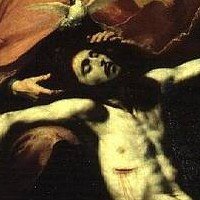
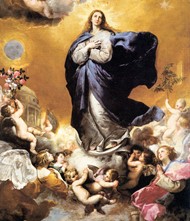
Spanish Realism During the second half of the sixteenth century the most progressive late Spanish Renaissance artists were ostensibly trying to master the secret of Renaissance grace and grandeur. What they were really doing, from the evolutionary point of view, was learning a new technique with which things seen could be represented with greater truthfulness - witness the constant intrusion into their grandiose compositions of incompatible, realistic features. During the era of the Spanish Baroque, this was to culminate in the work of Diego Velazquez (1599-1660), but before him the tradition was carried by several others, notably the Naples-based Spanish painter Jose Ribera, famous for his intense Christian art, and his contribution to the Vatican's propaganda campaign of Catholic Counter-Reformation Art. Strongly influenced by Caravaggio's tenebrism, Ribera became one of the greatest Spanish exponents of Baroque painting, and - along with El Greco, Velazquez and Zurbaran - one of the great exemplars of religious Baroque art. (See also: Spanish Baroque Artists.) He was one of the leading contributors to painting in Naples during the early seicento and his work paved the way for the Neapolitan Baroque in the second half of the 17th century. Among his famous religious paintings are Holy Trinity (1635, Prado, Madrid), The Immaculate Conception (1635, Augustinian Convent, Recoletas, Salamanca), St Agnes (1641, Gemaldegalerie, Alte Meister, Dresden) and The Adoration of the Shepherds (1650, Louvre). See also: Classicism and Naturalism in Italian 17th Century Painting. |
|
|
|
ARTS AND AESTHETICS WORLDS TOP ARTISTS
|
Ribera was born at Xativa, near Valencia. He came from a distinguished family. His father was adjutant at the important outpost, Castelnuovo, Naples. Ribera studied with the good Valencian painter, Francisco Ribalta (1565-1628), who was somewhat influenced by Caravaggio's tenebrism. Probably at Ribalta's suggestion, Ribera went to Italy, passing time in the north, at Parma, Padua, and probably Venice. Afterwards he moved to Rome where, according to legend, a Cardinal noticed him drawing from the frescoes outside a palace in Rome, and gave him lodgings. At any rate, Ribera lived in Rome from 1613-16, mixing with other Caravaggisti, including Gerrit van Honthorst (1592-1656) and Hendrik Terbrugghen (1588-1629). According to Giulio Mancini, he then moved to Naples, to avoid his creditors. At this point, the Kingdom of Naples was a colony of Spain, ruled by Spanish Viceroys. Ribera's Spanish nationality gained him access to the small Spanish ruling group in the city, and to the merchant community, that included notable art collectors. This allowed Ribera to attract the attention of the Viceroy, the Duke of Osuna, who awarded him a number of major commissions. Few paintings have survived from 1620 to 1626, although he did produce a number of excellent etchings designed to promote his art beyond Naples. His painting career seems to have resumed in the late 1620s, and thereafter he became accepted as the foremost Neapolitan artist, being especially popular with expatriate Spanish collectors. While in Naples he would have encountered many other Italian masters including: Battistello Caracciolo (1578-1635), Domenichino (1581-1641), Lanfranco (1582-1647), and Mattia Preti (1613-99). In addition, his own works had an impact on his successors, including Luca Giordano (1634-1705) and Francesco Solimena (1657-1747). From 1644 onwards, Ribera seems to have been plagued by ill-health, which reduced his output, athough his workshop continued to be busy. In 1651 money problems forced the sale of his large house and by his death in 1652 he was in serious financial difficulty. |
|
|
|
|
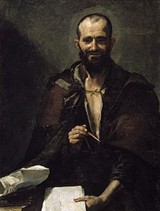
Ribera's artworks, mainly Christian art, portraits and genre-works, are traditionally grouped into three periods. The first period runs 1620-35 when, strongly under the influence of Caravaggio, he favoured dark backgrounds and violent contrasts of light and dark: see Drunken Silenus (1626, Capodimonte, Naples), Martrydom of St Andrew (1628, Museum of Fine Art, Budapest), Christ Disputing with the Doctors (1630, Kunsthistorisches, Vienna). The second period is 1635-9, when the influence of Van Dyck caused him to lighten his backgrounds, soften his chiaroscuro and make his shadows more transparent: see St Joseph and the Budding Rod (1635, Brooklyn Museum, New York), The Holy Trinity (1635, Prado, Madrid), Apollo Flaying Marsyas (1637, Museum of Fine Art, Brussels), Isaac Blessing Jacob (1637, Prado, Madrid) and The Martyrdom of St Philip (1639, Prado, Madrid). Third, 1640-52, a period characterized by looser modeling and silvery tones of colour: see The Club Footed Boy (1642, Louvre, Paris), St Jerome (1644, Prado, Madrid), Adoration of the Shepherds (1650, Louvre, Paris) and Communion of the Apostles (1651, S. Martino, Naples). Italian influence was present in Ribera's art throughout his life but with varying effect. That of Correggio and the Venetian Renaissance he soon shook off, but Caravaggio's proletarian Tenebrism influenced him permanently, though he developed a technique of his own. See also: Caravaggio in Naples (1607-10). Like Caravaggio, Ribera chose his models
from humble folk. He liked the character of old men, which had through
the years corrugated their bodies and heavily lined their faces. From
such models he multiplied character studies. These Riberas are perhaps
too unpleasantly aggressive. Although executed with every regard for construction
and character, there is little concern with composition, colour and the
refinements of picture making generally. A superior example of these character
studies is the nearly nude A Hermit (Prado, Madrid). Superficially,
in its deep shadows and broad areas of light, the work resembles Caravaggio,
but only superficially. Where Caravaggio effaces the brushwork, Ribera
asserts it. The surface is heavily loaded and streaked, and this produces
a positive coruscation quite unlike the smooth painting of Caravaggio.
The method is very similar to that of his contemporary Francisco Herrera
(1590-1654), and it is possible that Ribera had studied Herrera's pictures
before going to Italy. Ribera's colour in these early pictures is hot
and unpleasant and lacks harmonious relations with the sparse accessories
and simple backgrounds. We have to do rather with powerful studies than
with good pictures. The portrait
art and character studies of this period are more restrained and more
effective than their predecessors of some twenty years earlier. The magnificent
bust-portrait of a Musician, formerly in the Strogonoff Collection, now
at Toledo, would live comfortably in any company. The St. Mary of Egypt,
at Montpellier, has the utmost intensity of ascetic character, and the
relation of the gaunt figure to the craggy background is very handsome.
But Ribera's touch and taste are still uncertain. The very famous St.
Agnes, at Dresden, is painfully sentimental. There is much pleasure-giving
quality in the sturdy and lucid prose of one of his latest pictures, the
Adoration of the Shepherds (1650, Louvre, Paris). In it we have
an art of plain statement, without overtones of any sort, and it shows
the normal mellowing of his harsh talent in old age. About his memory grew up a legend of arrogance and violence. He was accused of forming a selfish protectionist clique, known as the "Cabal of Naples", in order to monopolize Neapolitan art commissions, using threats of violence to scare off competitors. See: Painting in Naples (1600-1700). However, although not known for his well-balanced temperament, there is probably a certain exaggeration in these stories. It is the view that one might expect Naples to take of a very successful foreigner who was always called La Spagnoletto or "little Spaniard". Paintings by Jusepe de Ribera can be seen in many of the best art museums throughout the world, notably the Prado Museum in Madrid and the Capodimonte Museum in Naples. |
|
• For profiles of the major art styles/movements/periods,
see: History of Art.
ENCYCLOPEDIA OF OLD MASTER PAINTERS |