Hans Holbein The Younger
Biography of German Renaissance Portrait
Painter.
MAIN A-Z INDEX - A-Z of ARTISTS

|
Hans Holbein The Younger
|
|
|
Hans Holbein (c.1497-1543)Contents • Biography |
|
COLOURS USED IN
PAINTING WORLDS TOP ARTISTS |
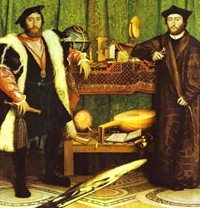
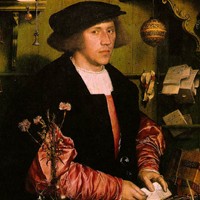
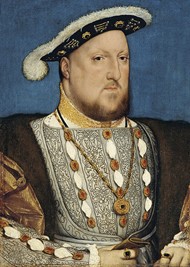
Along with Albrecht Durer and Matthias Grunewald, the painter Hans Holbein the Younger was a key figure in German Renaissance art and one of the very best portrait artists of the 16th century. Active in Basel and London, he became Court Painter to Henry VIII, while his other sitters included noblemen, merchants, diplomats and scholars. As well as portrait art, he also excelled at religious history painting, altarpieces, miniature portrait painting, and illustrations, as well as printmaking. In addition, Holbein was also a prolific draughtsman, completing over 1200 drawings for woodcuts. His two series Alphabet of Death and Dance of Death, printed from wood blocks after his designs, exemplifies the perfection of Northern Renaissance wood-engraving. Holbein's greatest portraits include: Portrait of Erasmus of Rotterdam (1523, National Gallery, London); Portrait of Sir Thomas More (1527, Frick Collection, New York); Portrait of a Lady with a Squirrel and a Starling (1528, National Gallery, London); Portrait of the Merchant Georg Gisze (1532, SMPK, Berlin); Portrait of Thomas Cromwell (1532-4, National Portrait Gallery in London); The Ambassadors (1533, National Gallery, London) and Portrait of Henry VIII (1536, Thyssen-Bornemisza, Madrid); Jane Seymour (1537, Kunsthistorisches Museum, Vienna); and Anne of Cleves (c.1539, Louvre). The portrait of King Henry VIII (1540) in the Gallerie Nazionale d'Arte Antica, Rome, is not fully authenticated as a Holbein original. Holbein also produced three masterpieces of religious art: The Body of the Dead Christ in the Tomb (1521 Kunstmuseum Basel), The Gerster Altarpiece (1522 Solothum Museum), and The Meyer Madonna (1526, Schlossmuseum, Darmstadt). Holbein remains one of the outstanding Old Masters of the 16th century. |
|
WORLD'S BEST ART WORLD'S COSTLIEST ART |
|
|
Holbein was born into a family of artists living in Augsburg. He received his first training from his father, Hans Holbein the Elder (1465-1524), the well-known artist and etcher, and perhaps also from Hans Burgkmair the Elder (1473-1531) - a former pupil of Martin Schongauer (d.1491) - who was married to his aunt. About 1515-16, at the age of 19, he left Augsburg and travelled to Basel, where he painted his first known work, a table-top, which is still largely medieval in composition (Schweizerisches Landesmuseum, Zurich). He may have worked for a short time in the studio of Hans Herbst, but his extraordinary talent led to early independence and he was soon moving among humanist circles. In 1516 he illustrated a copy of the Praise of Folly (Basel, 1515 edition) by the Dutch humanist and theologian Desiderius Erasmus, whose friend he later became. Already he was showing signs of a freer, more detached view of the world, an outlook encouraged by the humanist spirit and enlightened atmosphere of the city. Humanists viewed the world scientifically, and placed importance on recognising the unique characteristics of individual human beings. The young Holbein was impressed by this outlook and, where possible, tried to capture the individual qualities of his subjects, in as much detail as possible. |
|
|
In view of his precocious talent, it wasn't long before Holbein began to paint the wealthy merchant population of the city, executing a number of portraits including Portrait of Burgomaster Jakob Meyer (1516, Kunstmuseum Basel) and Dorothea Kannengiesser (1516, Kunstmuseum Basel). In 1517 he assisted his father with the decoration of the facade of the Hertenstein house, Lucerne (destroyed 1824), in an Italian Renaissance style. At this time he painted a Lamentation on the Death of Christ (1519, known only through a copy). It is probable that, about this time, he went to Italy, for his later work indicates a knowledge of paintings by Andrea Mantegna in Mantua. In 1519, after being elected a member of the Zum Himmel guild, he took over the studio of his deceased brother and married Elsbeth Schmid. It was the start of a period of intense productivity lasting right up to his departure for England, in 1526. During this time he produced very nearly all the religious works which have survived, as well as a work of altarpiece art and numerous murals (in houses belonging to the aristocracy of Basel and the Council Chamber of the Town Hall). Sadly, all these murals have been destroyed but their sheer scope is an indication of Holbein's reputation. During the period 1519-1520 Holbein and his assistants produced five scenes of the Passion, of which The Last Supper and The Flagellation are entirely by his hand (1524, Kunstmuseum Basel). In these works Holbein's style of painting varies between a powerful German expressionism inherited from late German Gothic art courtesy of Matthias Grunewald - whose influence is particularly visible in the harrowing The Body of the Dead Christ in the Tomb (1521, Kunstmuseum Basel) - and the more objective representation, characteristic of the artists of the Italian High Renaissance, with its mixture of the religious and the secular. Thus in his Gerster Altarpiece (1522, Solothum Museum) the figures are Germanic in concept but are integrated into a Renaissance composition. The Meyer Madonna (1526, Schlossmuseum, Darmstadt), painted for the altar of the chapel of Jakob Meyer's castle near Basel, is a masterpiece from this period. Also from 1526 come the Organ Doors from Basel Cathedral (Basel, Kunstmuseum) with their massive effigies of the Virgin and three saints executed in grisaille. Other religious paintings which have survived from this period include: Noli Me Tangere (1524, Royal Collection, Hampton Court, UK) and Portrait of Lais Corinthiaca (1526, Kunstmuseum Basel). In addition to his religious paintings, Holbein also executed a number of famous portraits, including: Portrait of a Woman (1517, Mauritshuis), Portrait of Bonifacius Amerbach (1519, Kunstmuseum Basel), Portrait of a Young Man (1520, National Gallery of Art, Washington, DC) and Portrait of Erasmus (1523, Louvre). By the mid-1520s, Holbein was undoubtedly the leading painter in Basel, producing murals, altarpieces, portraits and designs for stained glass art. In addition, he was heavily involved in printmaking, and between 1523 and 1526 coompleted his famous Dance of Death, of which three blocks were made in 1527 (Berlin Dahlem, Print Room). The first version, comprising 41 engravings, was printed in Lyons in 1538 by the Trechsel brothers. |
|
|
In 1526, in response to a decline of patronage for religious works in Basel, chiefly caused by the disturbances of the Reformation, Holbein travelled to London where he settled for two years. Armed with an introduction to Sir Thomas More from Erasmus, his reputation grew quickly as people marvelled at his ability to capture an exact likeness of his sitters. Works from this period include: Portrait of Sir Thomas More (1527, Frick Collection, New York); Portrait of Sir Henry Guildford (1527, Royal Collection, Windsor, UK); Portrait of Archbishop William Warham (1527, Louvre); Portrait of Sir Brian Tuke (1527, National Gallery, Washington DC); Portrait of Astronomer Nicholas Kratzer (1528, Louvre); Double Portrait of Sir Thomas Godsalve and his Son John (1528, Alte Meister Gallerie, Dresden) and the wonderful Portrait of Unknown Lady with a Squirrel and Starling (1528, National Gallery, London). In 1528, Holbein went back to Basel, possibly to maintain his citizen's rights. He bought a house and was again in demand for a variety of work. (See also: The Artist's Family, 1528 Kunstmuseum). Sadly, however, increased religious strife within the city led to a ban on all religious painting and in 1532 he returned to London leaving his wife and children in Switzerland. He would see them only once more, during a brief visit in 1538. During his time in Basel, Holbein finished the mural decoration of the Basel Council Chamber, and completed a number of wood-engravings, along with a few designs for stained glass windows (still permissable), on the theme of the Passion, and Portrait of Erasmus von Rotterdam in a Round Frame (1532, Kunstmuseum, Basel). Portrait Painter to Henry VIII: 1532-43 On his return to London Holbein discovered that Sir Thomas More had fallen out of favour with the King. He therefore looked for patrons among the London representatives of the Hanseatic League, for whom he painted a large number of portraits. They included Georg Gisze of Danzig (1532, Gemaldegalerie, Berlin), Derich Born (1533, Royal Collection, UK), and The Young Merchant (1541, Kunsthistorisches Museum, Vienna). He also produced a number of decorative works, drawings and engravings. After 1533, on the recommendation of Thomas Cromwell, he undertook a wide series of commissions for Henry VIII. He became his court painter and fashion designer (he designed royal robes, buttons, buckles and pageant weapons), and Henry also sent him to foreign courts to paint portraits of possible candidates for marriage. Royal patronage also included demands for miniatures, decorative works and jewellery designs. During this time Holbein executed an important series of historical portraits, including those of Robert Cheseman (1533, Mauritshuis, the Hague); Charles de Solier, Sire de Morette (1534, Staatliche Gemaldegalerie, Dresden); Sir Richard Southwell (1536, Uffizi); Henry VIII (1536, Thyssen-Bornemisza Collection, Madrid); Christina of Denmark (1538, National Gallery, London); Edward, Prince of Wales (1539, National Gallery of Art, Washington DC); Thomas Howard, Duke of Norfolk (1539-40, Royal Collection, UK); Henry VIII (1540, Galleria Nazionale d'Arte Antica, Rome); and John Chambers (1542, National Gallery, London). For more of Holbein's English portraiture, see the National Portrait Gallery in London.
His ability to capture such an accurate likeness of his subjects led the modern artist David Hockney to speculate that perhaps Holbein had used a concave mirror to project the image of his subject onto his drawing surface, and then traced the image. Art historians have not accepted this thesis.
By the mid-1530s Holbein was at the height of his powers, capable of organizing his surfaces with incomparable mastery. Borrowing compositional elements from paintings like the Mona Lisa (1503, Louvre), he also benefited from studying works by the artists of the Netherlandish Renaissance, such as the Antwerp masters Jan Gossaert (c.1470-1533), and Quentin Massys (c.1465-1530), as well as the Italian painters in the service of Henry VIII, from whom Holbein learned decorative techniques for his full-length portraits. Moreover, he was evidently familiar with the work of the Fontainebleau School and the black and red chalk drawings of the Flemish portraitist Jean Clouet (c.1485-1540). Due to the loss of most of his large-scale works, Holbein tends to be regarded only as a portrait painter - albeit one of the greatest of all time. His portraiture succeeds in mastering the two basic problems of draughtsmanship (how to accurately represent individual subjects), and composition (how to organize pictorial space, using linear perspective, sfumato and chiaroscuro) until, in the later portraits, they have arrived at a kind of zen-like equilibrium between realism and abstraction, between Gothic tradition and the new humanistic Renaissance art, between the northern European love of sumptuous detail and the grandeur and dignity of the Italian Renaissance. Holbein died in London in 1543, at the height of his vigour and fame, while he was working on another portrait of Henry VIII. Struck down by the Great Plague of London, he was only 46 years old. Key Figure in German Renaissance Along with Northern Renaissance artists such as Lucas Cranach the Elder (1472-1533), Albrecht Durer (1471-1528) and Matthias Grunewald (c.1470-1528), Holbein played a dominant role during the first half of the 16th century in moving German art out of the Middle Ages into the Renaissance era. In addition, he dominated portraiture in Switzerland and England during the same period. Certainly none of his contemporaries and immediate successors approached the depth of his characterization or the precision of his technique. Indeed, Holbein influenced generations of later portraitists, including such virtuosi as Diego Velazquez (1599-1660) Rembrandt (1606-1669), and Jan Vermeer (1632-1675). Paintings by Hans Holbein can be seen in many of the best art museums around the world. Significant holdings of his portraiture are in the National Gallery London; the Kunstmuseum Basel; and the British Royal Art Collection, at Windsor. |
|
• For information about the best artists, see: Homepage.
Visual
Artists, Greatest |