Cimabue
Biography of 13th Century Proto-Renaissance
Painter.
MAIN A-Z
INDEX - A-Z
of ARTISTS

|
Cimabue
|
|
GREAT EUROPEAN PAINTERS |
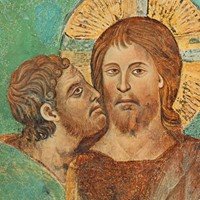
Cimabue (c.1240-1302)Cimabue, the nickname (Ox-head) given to Cenni di Peppi, was the major artist working in Florence at the end of the 13th-century. Associated with Gothic art, he was an important contributor to Pre-Renaissance Painting (c.1300-1400). A contemporary of Dante (who describes him in The Divine Comedy, as the leading painter of the time), he is supposed to have taught Giotto (1267-1337) and initiated the move from the static "unreal" style of Byzantine art to the realistic trecento idiom of Proto-Renaissance art, using three-dimensional space, more natural-looking human forms and greater emotion. Giorgio Vasari (1511-74), the Italian, writer, painter and architect - writing 300 years later - places an account of Cimabue at the very beginning of his "Lives of the Artists" (1550), stating that he gave "the first light to the art of painting". But little if any solid evidence remains to support this assertion. |
|
HISTORY LIST OF PAINTERS/SCULPTORS ITALIAN RENAISSANCE
ERA |
|
COLOURS USED IN
PAINTING
|
Biography The earliest mention of Cimabue places him in Rome in 1272, a significant location as the city was in the forefront of artistic innovation at the time. Artists like Pietro Cavallini (active 1270-1330) and Jacopo Torriti (fl.1290s) were already taking the first steps towards greater naturalism in art, one of the key elements of the forthcoming era of Renaissance art (c.1400-1530). Only one surviving work is known to be by Cimabue: a St John in the apse mosaic in the Duomo of Pisa Cathedral (1301-2). However, on the basis of this, tradition has attributed to him many religious paintings of outstanding quality from the end of the 13th-century. The most credible of these attributions include, a cycle of fresco paintings in the Upper Church of S.Francesco, Assisi (c.1277-79), the S.Trinita Madonna (before 1285, Uffizi, Florence), and a beautiful Crucifix in S.Croce, Florence (1280s) (damaged in the 1966 flood). The Assisi Upper Church frescos feature the Four Evangelists (in the vaults of the crossing), Life of the Virgin (walls of the apse), Apocalyptic Scenes and Crucifixion (left transept), Lives of St Peter and St Paul (right transept). In general, their preservation is poor, but enough remains visible to show that the Crucifixion is a work of enormous drama and power. And Cimabue masterfully unifies the picture plane with the architectural space it occupies. The S.Trinita Madonna, Cimabue's major surviving example of altarpiece art, is - like the Rucellai Madonna, by Duccio di Buoninsegna (c.1260-1319) - one of the most majestic of the series of huge gabled panel-paintings of the Madonna and Child which culminates in Ognissanti Madonna (1307) by Giotto. It employs convincing linear perspective with a tentative central vanishing point, and marks a significant step in the Florentine depiction of realistic pictorial space. Cimabue's talent is also clearly visible in the S.Croce Crucifixion. The flesh is painted in a new softness, and Christ's body is portrayed using an extremely emotive Gothic-style "S" curve, after the Tuscan artist Giunta Pisano (active c.1230-55). If these (plausible) attributions are accurate, then Cimabue was indeed the foremost figure in fine art painting of the pre-Giotto era. Some art historians also credit Cimabue with the design of the huge round stained glass window of the choir of Siena Cathedral (c.1287), although this attribution remains contentious. Other works associated with Cimabue include: Madonna and Child (1290-5, Louvre, Paris); and Christ Enthroned between the Virgin and St John the Evangelist (1301-2, Pisa Cathedral). In any event, by the beginning of the 14th-century, Cimabue, his pupils and followers, represented an important group of medieval artists in the historical development of Italian painting, and were an important precursor of the Early Renaissance in Florence. Paintings by Renaissance artists like Cimabue can be seen in many of the best art museums throughout the world. |
|
• For profiles of the great artistic
movements/periods, see: History of Art.
Visual
Artists, Greatest |