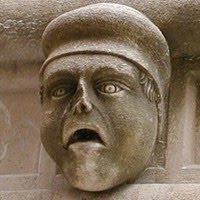
Giorgio da Sebenico
Croatian Late Gothic Sculptor: Cathedral
of St James, Sibenik.
MAIN A-Z INDEX - A-Z of SCULPTURE

|
Giorgio da Sebenico
|
|
BEST SCULPTORS |
Giorgio da Sebenico (1410-73)One of the important medieval artists in 15th century Croatia, Giorgio da Sebenico was a sculptor and architect from Dalmatia ( modern day Sibenik, Croatia), then ruled by the Republic of Venice. Da Sebenico worked for the majority of his life on the Gothic Sculpture and Gothic architecture of the Cathedral of St James (Sibenik). The building is now of such beauty that it is a protected UNESCO World Heritage Site. Biography Born in 1410, da Sebenico was educated in Venice as an architect, learning both sculpture and architectural design in the workshop of Giovanni and Bartolomeo Buon (both Gothic sculptors and architects). The extent of Da Sebenico's contribution to the Buon workshop is not clear, but it is likely that he contributed to the marble sculpture on the baptismal font (c.1430-40) in the church of San Giovanni in Bragora, Venice. He also produced some stone sculpture for the Porta della Carta of the Doge's Palace in Venice (the seat of the government). |
|
FAMOUS MEDIEVAL
SCULPTORS MEDIEVAL SCULPTURE |
|
German Gothic
Sculpture
|
Cathedral of St James In 1441 he married Elisabetta da Monte, the wealthy daughter of a local merchant in Sibenik. He settled in Sibenik, investing his savings in a local grocery store and shop. He also designed and built a house for himself, in the vicinity of St James's Cathedral (also known as Duomo di Sebenico). It was his subsequent work at the Cathedral, on which his reputation and that of Dalmatian gothic architecture would be built. The same year he was appointed Master of Works at the Cathedral and appointed with the task of transforming the simple basilica into a more imposing and impressive structure.
Da Sebenico planned to build a choir, to raise the roof which only came to the top of the aisle vaults, and to cover the crossing with a cupola or lantern. He would remain in this task until his death in 1473, his project only half realised. Between 1475 and 1505 the project was continued by Tuscan Master of Sculpture Niccolo di Giovanni Fiorentino. Fiorentino continued the upgrade in the style of Renaissance art, completing the dome, outer sculptures of Saint James, Michael and Mark, the roof and the upper facade. He also built the parallel galleries (triforias) and worked on the sanctuary and presbytery. When Fiorentino died in 1505, the construction was finally completed by two craftsman, Bartolmeo of Mestra and his son Jacob. They followed the specific instructions Fiorentino laid down before his death. The cathedral finally became consecrated in 1555. In medieval Europe it was rare for an artist to sign his work, which had lead to obvious problems of identifying genuine works in modern times. However, da Sebenico did sign one relief sculpture in the Cathedral of St James. The relief was on the north apse and he inscribed the words (translated from Latin): 'Georgius sculptor son of Mathei from Zadar citizen of Sibenik'. |
|
• For the history and types of sculpture,
see: Homepage.
Plastic
Art |